

Menstrual cycle
The menstrual cycle explained simply
(for couples)
The menstrual cycle is often reduced to just periods. However, it influences much more than just a few days in the month. Energy, mood, needs, mental load, daily organization... The menstrual cycle also impacts couple life, and understanding it allows not only for better self-knowledge but also for better communication together.
The menstrual cycle corresponds to all the hormonal changes that occur every month in the body of a menstruating person. It begins on the first day of the period and ends the day before the next period.
A cycle lasts an average of 28 days, but it is perfectly normal for it to vary between 21 and 35 days depending on the person.
This cycle consists of four phases, each having specific effects on the body, mood, and energy levels.
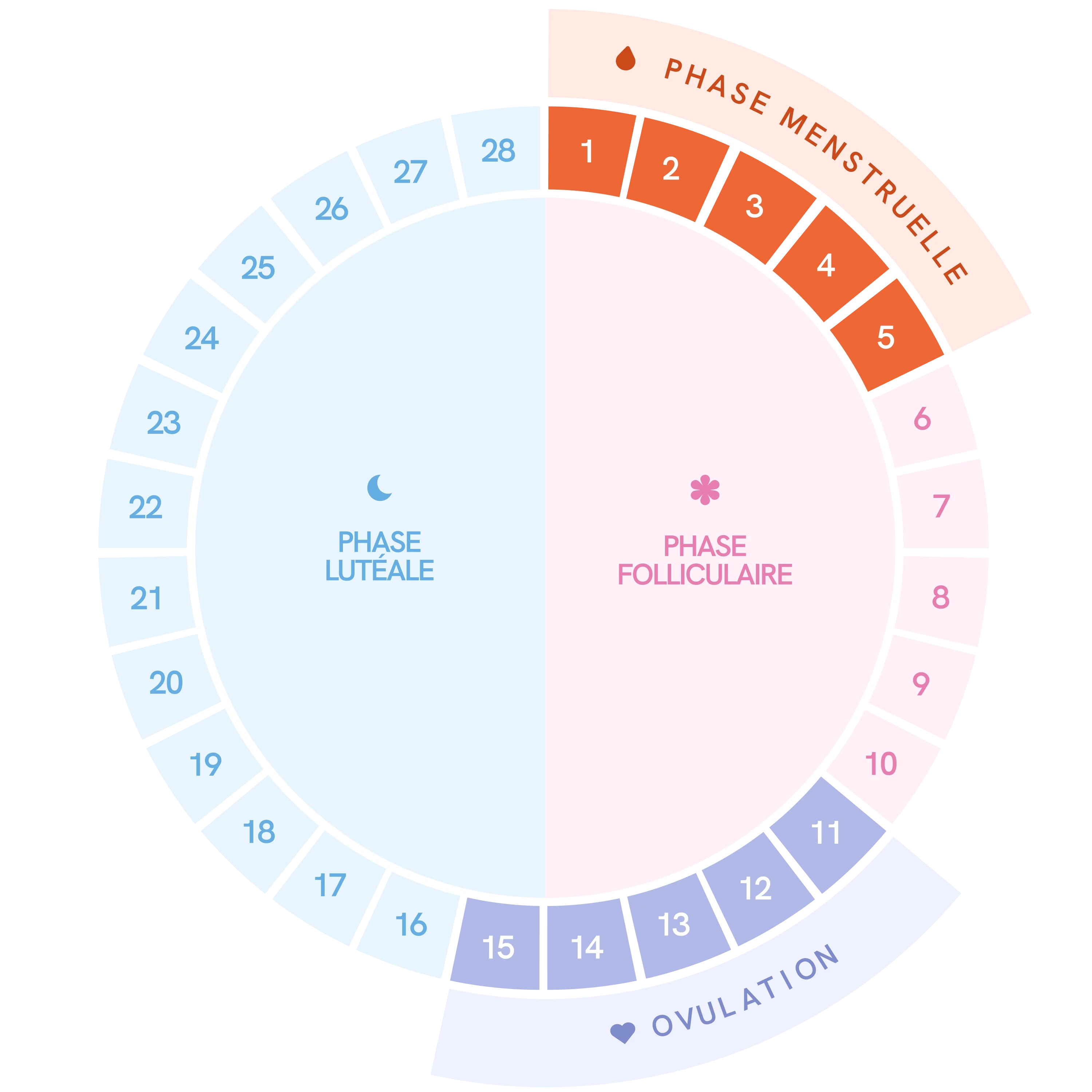
The different phases of the menstrual cycle
Periods (Days 1-5)
Cramps
Fatigue
Hot water bottle
Need for support
Periods mark the beginning of the cycle. The body eliminates the uterine lining, leading to bleeding. During this phase, fatigue is often more present. The body needs rest and gentleness. Emotionally, greater sensitivity may appear.

In a couple, understanding this phase helps reduce tension and promote empathy, listening, and kindness during this tiring period.
Follicular phase (Days 6-10)
Energy boost
Good mood
Self-confidence
Desire to move
After the period, the body gradually restarts the cycle. Hormones increase, energy returns, and mental clarity improves. This is a phase often associated with motivation, the desire to plan ahead and get organized in daily life.
In a couple, it's a good time to discuss, plan, and make decisions together, but also to plan activities and move together.
Ovulation (Days 11-15)
Energy at its peak
High libido
Motivation
Complicity
Ovulation corresponds to the hormonal peak of the cycle. Energy is generally higher, mood is stable, and communication is smoother. This phase favors exchanges, connection, and shared moments.
In a couple, it is often the phase where one feels the most complicity with their partner.
Luteal phase (Days 16-28)
Fatigue
Drop in energy
Need for support
Need for calm
After ovulation, the body prepares for a new cycle. Hormones gradually decrease. Fatigue may return, sometimes accompanied by irritability or an increased need for calm.
In a couple, anticipating this phase makes it possible to adapt the pace, avoid misunderstandings, and better respect each person's needs.
Why does the menstrual cycle also concern the couple?
The menstrual cycle influences mood, energy, and emotional availability. When only one person is aware of it, the mental load rests on them. Conversely, sharing this information allows for better mutual understanding.
Tracking the cycle together helps anticipate key moments, communicate better, reduce unnecessary tension, and strengthen complicity.

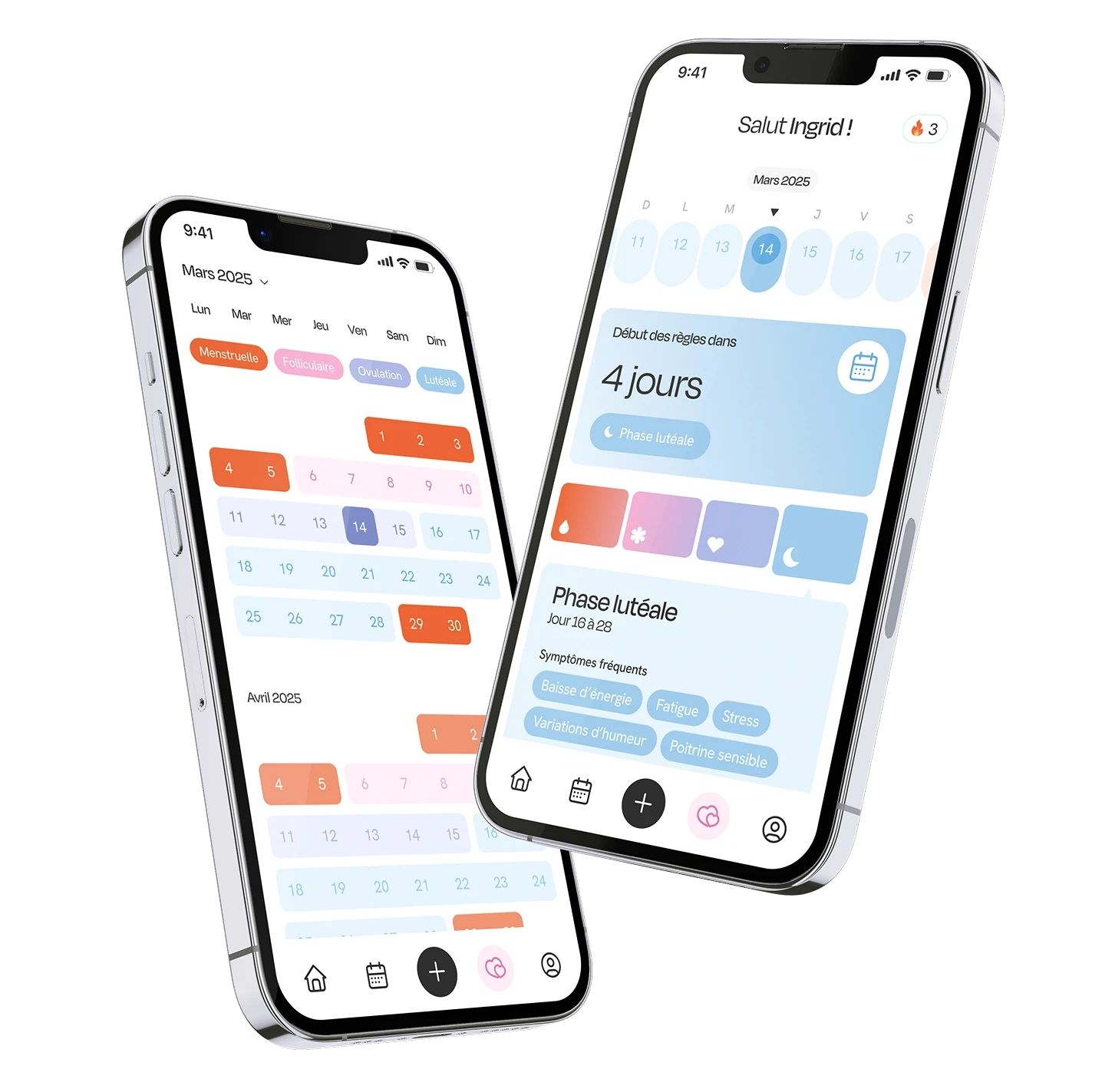
Wenly: The menstrual tracking app for couples
It is with this logic in mind that Wenly was born, the first French application for menstrual cycle tracking centered on the couple.
Wenly allows you to track your cycle simply, understand the associated phases and symptoms, and share the essentials with your partner without having to explain everything.
The goal is clear: transform menstrual tracking into a tool for understanding and communication for two.