

Endometriosis affects roughly one woman in ten of reproductive age, between 1.5 and 2.5 million people in France according to Inserm. Behind that number lie pain, a long and often winding path to diagnosis, and a reality we rarely talk about: the disease doesn't only affect the person living with it, it also moves into the relationship.
When a partner lives with endometriosis, the other one often feels helpless. How do you help without minimising the pain? How do you keep talking about intimacy when sex becomes painful? This article is written for both people in the couple. We'll look at what endometriosis and relationships really involve, how the disease weighs on the bond, and above all what you can put in place, together, to get through it better.
What endometriosis actually is
Endometriosis is a chronic gynaecological disease. It is defined by the presence of tissue similar to the uterine lining (the endometrium) outside the uterus: on the ovaries, the bladder, the intestines or other organs in the lower abdomen. With each cycle, this tissue responds to hormones as the endometrium would, but it cannot be shed. That triggers inflammation, lesions, and sometimes intense pain.
Symptoms vary widely from one person to another. The most common are very painful periods, pelvic pain that persists outside menstruation, significant fatigue, digestive or urinary problems, and pain during sex. Some women experience several of these signs, others only one. It is precisely this variability that makes the disease so hard to identify.
One thing often surprises people: the intensity of the pain says nothing about the severity of the lesions. Endometriosis that looks mild on imaging can cause disabling pain, and the reverse is true too. This gap partly explains why, for a long time, women's accounts of their pain were doubted.
An invisible illness, and this is where the couple comes in
In France, the average delay between the first symptoms and diagnosis reaches seven years, again according to Inserm. During those years, many women are told that “periods are supposed to hurt,” or that the pain is “all in their head.” This long wandering takes a heavy psychological toll.
The partner holds a particular place here. They are often the first witness to the flare-ups, the difficult nights, the medical appointments that lead nowhere. Supporting your partner starts there: believing the other person's pain, without playing it down or trying to “fix” it at all costs, is already real support. Conversely, a clumsy remark like “are you sure you're not exaggerating?” can do a lot of damage, even when it isn't meant unkindly.
There is good news on the diagnosis front: things are moving forward. Since March 2025, a saliva test (Endotest) has been trialled in France and covered by the health insurance system under an innovation scheme. It detects markers of endometriosis from a simple saliva sample, with a result in about ten days — enough, in time, to shorten those years of waiting.
Intimacy and sex, a subject we don't dare raise
Among the symptoms of endometriosis, dyspareunia (pain during sex) affects nearly one woman in two, according to the European WERF EndoCost study. That shows just how closely endometriosis and sex are linked. This pain ranges from simple discomfort to making sex impossible. Over time, many women come to dread it, which sets up a difficult cycle: fear of pain lowers desire, and the lack of desire creates guilt.
Within the couple, this topic is often avoided. The person who is ill is afraid of disappointing, the partner doesn't dare push for fear of hurting, and silence sets in. Yet silence is rarely a solution. A few markers help you move past it:
Name the pain instead of avoiding it. Saying “it hurts here, not tonight” is better than a refusal with no explanation, which can be experienced as rejection.
Broaden the definition of intimacy. Sex is not limited to penetration: tenderness, closeness and other forms of pleasure remain possible and matter.
Get support. A gynaecologist, a sex therapist or a specialised physiotherapist can offer concrete solutions. No one has to carry this alone.
Mental load and the question of children
Endometriosis reaches far beyond the body. Living with chronic pain, managing treatments, anticipating flare-ups: all of this creates a continuous mental load that weighs on mood and on the relationship. An EndoFrance & My S Life survey of women with the condition found that around a third report tension with their partner linked to the disease. Acknowledging this reality, rather than treating it as a whim or a phase, already changes a great deal.
The desire to have children is another sensitive point. Endometriosis is associated with reduced fertility in 30 to 40% of the women affected. That does not mean pregnancy is impossible, far from it, but the path can be longer and more demanding, sometimes involving assisted reproduction. Going through this stage together — learning about it as a couple and leaning on a medical team — keeps one person from carrying the weight of the waiting and the decisions alone.
What you can do, together
There is no single answer to a chronic illness. But a few couple habits make a real difference day to day.
Learn about it side by side. When the partner understands how the disease works, they stop underestimating it and become a genuine ally. Reading, listening to accounts from others, asking questions during appointments: information is something you share.
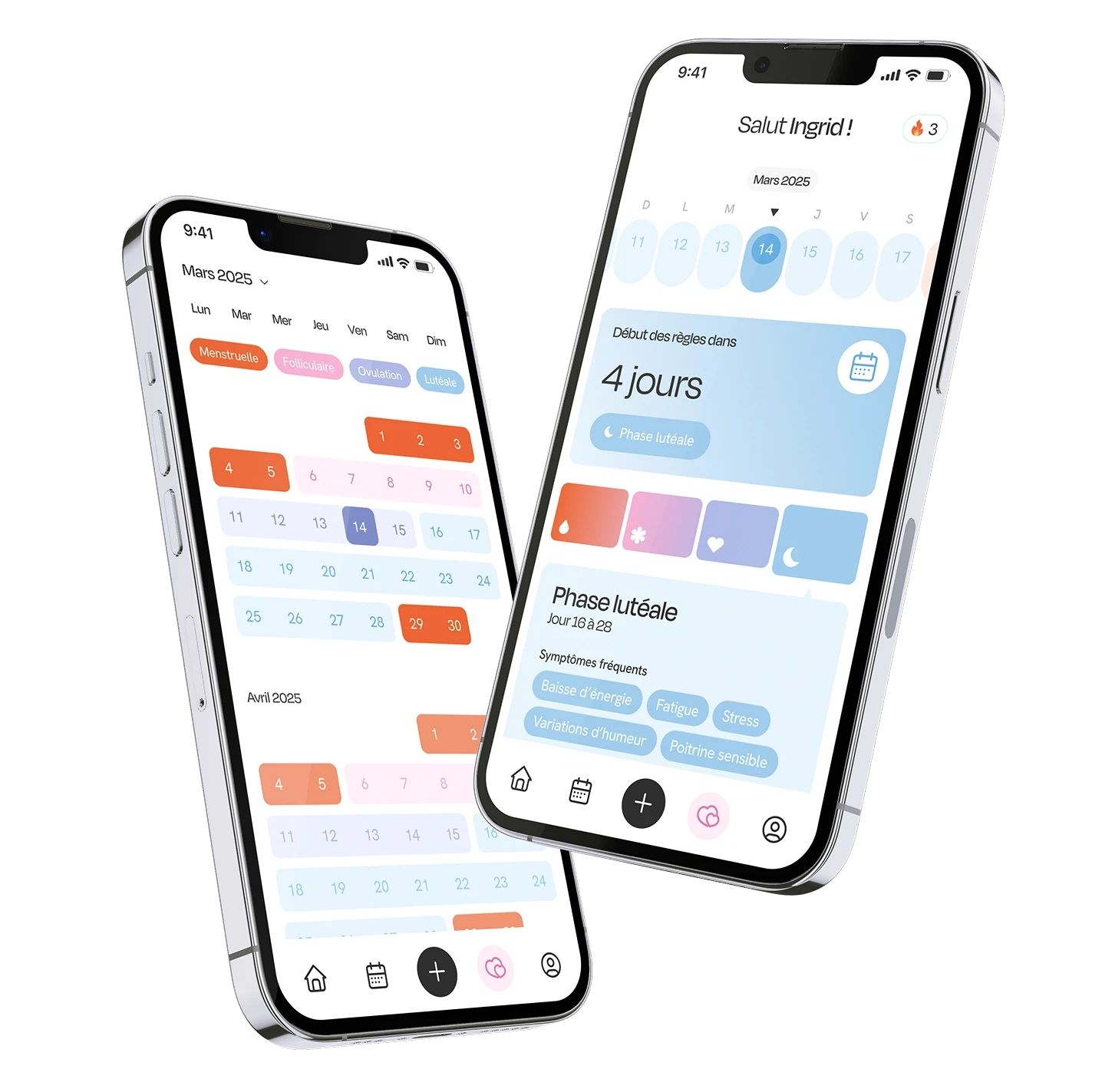
Track symptoms together. Noting pain, fatigue and the hard days helps you spot patterns, anticipate sensitive periods and arrive at appointments with concrete evidence. This is exactly what an app like Wenly is for: sharing the tracking of the cycle and symptoms within the couple, so the partner knows where the other one stands without having to ask, and so medical appointments rest on real data rather than vague memories.
Keep the conversation open. Set aside moments to talk about the illness, but also about everything else. Endometriosis should not become the couple's only subject. Preserving light moments, free of pain and medicine, protects the relationship as much as anything else.
Accept help. Patient associations, support groups, psychological support: these resources exist and they have proven their worth. Asking for help is not an admission of weakness, it's a way of holding on over the long term.
Endometriosis is a demanding illness, but it does not define a couple. Many partners say that by learning to understand it and talk about it, they felt closer, not further apart. The starting point stays the same: believe the other person's pain, learn about it, and move forward as a team rather than each on your own side.
Frequently asked questions
Is endometriosis contagious or hereditary?
It is not contagious. There is, however, a genetic component: having a mother or sister with the condition increases the risk, without making it certain.
My partner has pain during sex — is it all in their head?
No. Pain during sex (dyspareunia) is a recognised symptom of endometriosis and affects nearly one woman in two. It has a physical cause and deserves to be taken seriously and followed up medically.
Does endometriosis prevent you from having children?
Not always. It is associated with fertility difficulties in 30 to 40% of the women affected, but many pregnancies are possible, either naturally or with medical help.
How can I support my partner day to day?
By believing their pain, learning about the disease, tracking symptoms together and keeping the conversation open, including about intimacy. Going with them to appointments also helps make sure they don't face the medical journey alone.
Sources: Inserm — info.gouv.fr — EndoFrance — EndoFrance & My S Life survey