
Thinking about coming off the pill, whether to try for a baby, to give your body a break, or simply because it no longer suits you? It's a common, valid decision, but it usually comes with a lot of questions. When will my periods come back? Will my acne return? How long before I can conceive?
Here's the reassuring part: in the vast majority of cases, the body knows very well how to find its rhythm again. This article walks calmly through what happens after stopping the pill: the return of your periods, the return of fertility, the temporary effects you might notice, and the signs that should prompt a doctor's visit. And because contraception concerns both partners, we'll also look at how to go through this transition together.
When do periods come back after stopping the pill?
First thing to understand: the bleeds you had on the pill weren't true periods, but withdrawal bleeds, triggered by the drop in hormones at the end of each pack. Once you stop, your natural cycle has to start up again, and that takes a little time.
According to the NHS, when you stop the pill your fertility returns to whatever is normal for you, and there's no need to worry if your periods don't start straight away. For most women, a first cycle returns within a few weeks to a few months. If your cycles were irregular before the pill, they may become irregular again: the pill imposed an artificial rhythm that masked your natural pattern.
Does fertility come back quickly?
This is probably the most widespread fear, and the least justified. The pill does not cause infertility and does not delay your long-term fertility. As the NHS points out, fertility usually returns to your previous level about a month after stopping.
In practice, ovulation can happen as early as the first cycle, sometimes even before your first period returns. In other words, pregnancy is possible immediately after stopping. That matters both ways: if you want a baby, there's no waiting period to observe; if you don't want one yet, you'll need another form of contraception straight away.
One important point the NHS makes: the pill can mask pre-existing conditions, such as irregular cycles linked to polyendocrine metabolic ovarian syndrome (formerly PCOS). These aren't caused by stopping the pill, they were simply hidden while you were on it. If your periods are slow to return while you're trying to conceive, it can be an opportunity to uncover, and treat, a difficulty that was already there.
The effects of stopping, week by week
The synthetic hormones in the pill are cleared from your body within a few days. But your body takes a little longer to restore its own natural hormone production. During this adjustment phase, which often lasts two to three months, some effects may appear:
The return of what the pill was regulating. If you had acne, painful or heavy periods, or marked premenstrual symptoms before the pill, these signs can come back. It isn't really a side effect of stopping, but the return of your natural baseline.
Light spotting or irregular cycles while your balance settles again.
Mood changes, breast tenderness, shifts in libido. Many women, on the contrary, report a rise in libido after stopping.
These are most often temporary. They reflect a reorganisation, not a lasting imbalance.
Do you need a "detox" after the pill?
There's a lot out there about cures meant to "cleanse" the body of hormones. Medically, the idea has no basis: the pill's hormones are eliminated naturally within a few days, without any supplement or special protocol. What your body really needs is time and good everyday habits: sleep, balanced eating, physical activity. Nothing dramatic, but that's what genuinely helps the cycle settle back in.
When to see a doctor
Most situations resolve on their own. Still, a check-up is advised in some cases. If your periods haven't returned more than 3 months after stopping (this is called post-pill amenorrhoea), it's worth seeing a doctor to look for a cause. Speak to a professional too if your periods come back very painful or very heavy, if acne becomes significant, or if you've been trying to conceive for several months without success. Seeing a doctor isn't a sign that "something is wrong": it's simply making sure the transition is going smoothly.
Coming off the pill, a decision you make together
It's easy to forget, but coming off the pill concerns both people in the couple. If you're stopping for a baby, it's a step to prepare together. If you're stopping for other reasons, the contraception question comes up again: condoms, another method, fertility tracking… and this contraceptive load shouldn't rest on one person alone.
The weeks after stopping are also easier to navigate when your partner understands what's going on. Knowing that mood, skin or libido may shift for a while heads off a lot of misunderstandings. And tracking the return of your cycle together, noting the first period and signs of ovulation, helps you see clearly, spot any irregularity, and walk into a future appointment with real markers rather than vague memories.
Frequently asked questions
How soon after stopping the pill can you get pregnant?
Potentially from the first cycle, sometimes even before your period returns. Fertility usually returns to your normal level within about a month. There's no minimum waiting time to observe.
Can the pill make you infertile?
No. The pill does not cause infertility and does not delay long-term fertility. It may, however, have masked a pre-existing condition that becomes visible again once you stop.
Why haven't my periods come back after stopping the pill?
A slow return of cycles is common and normal for a few weeks. If the absence of periods lasts more than three months, it's best to see a doctor to look for the cause.
Should I wait for a natural cycle before trying for a baby?
It isn't required. Waiting for a first natural period mainly helps date a possible pregnancy more accurately, but conceiving in the very first month is entirely possible and safe.
Do the effects of stopping last a long time?
Usually not. Temporary effects (acne, mood, irregular cycles) generally ease within two to three months, as your natural hormonal balance settles back in.
Sources: NHS
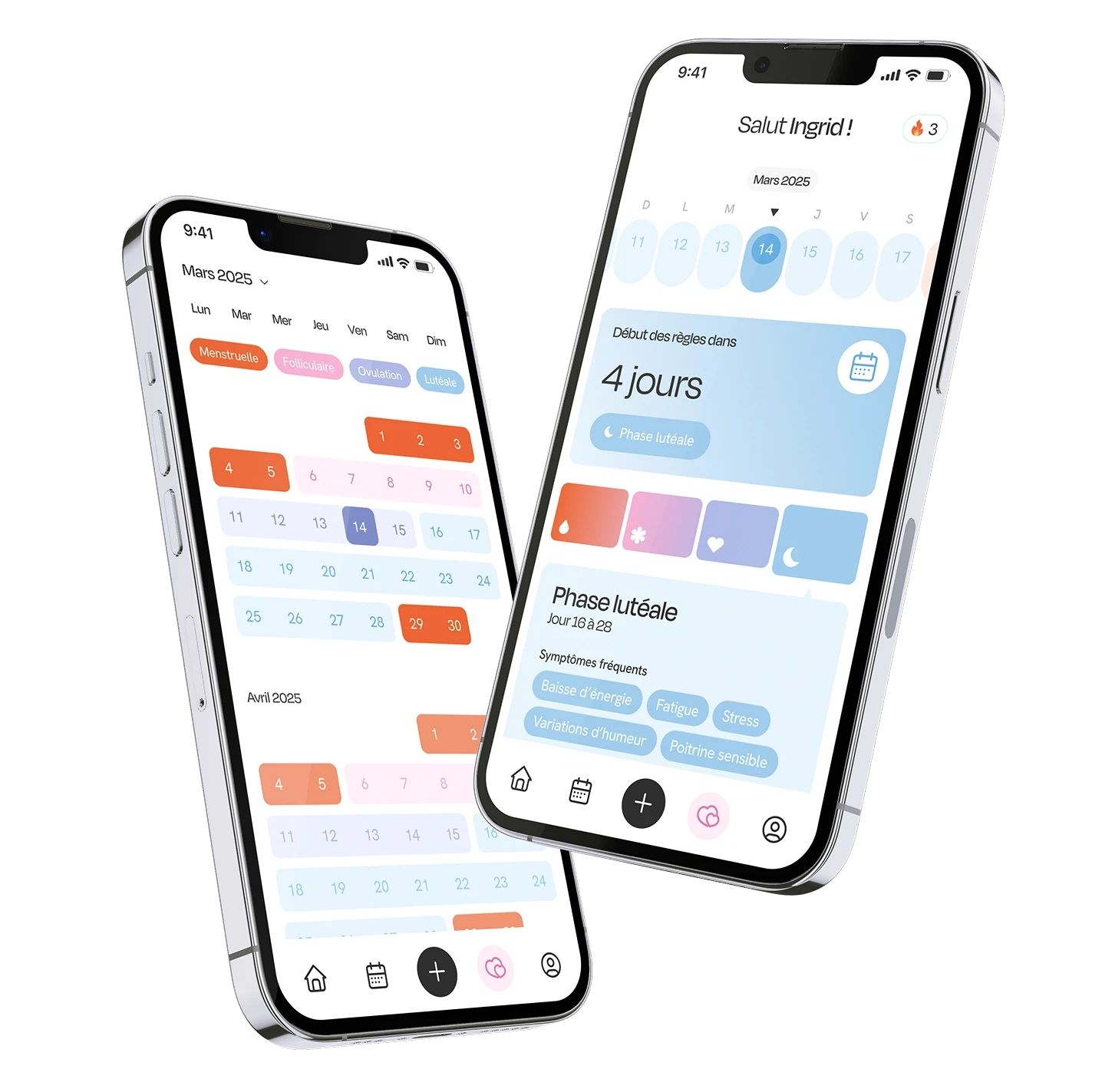
Guiding your cycle back is easier when you're not doing it alone. With Wenly, you can track your periods, ovulation and symptoms after coming off the pill, and share that tracking with your partner, so you go through the transition together and approach every medical appointment with a clear picture.