

Couple
Consent in Relationships: So Much More Than a Simple “Yes”
Consent doesn't stop after the first time. What it really means day to day, and how to make it a natural conversation as a couple.

We tend to think consent only matters at the very start of a relationship, or in the extreme cases you read about in the news. In reality, it runs through the whole of a couple's life together, including after years side by side, including in a solid, trusting relationship. Whether you're married or have been together for years changes nothing: consent from both partners remains necessary for every moment of intimacy.
This article explains what consent really covers, why it's never given "once and for all," and how to make it a natural habit in a couple rather than an awkward or anxiety-inducing topic. Far from being a constraint, when it's lived well, consent is what allows for freer, more fulfilling intimacy.
Consent, a broader idea than you might think
Consent means freely agreeing to a moment of intimacy, whether that's a kiss, touch, or sex. As RAINN explains, consent is a mutual agreement that should always be clear, voluntary, and given without pressure, manipulation, or fear.
This applies just as much within an established relationship as at the start of one. Being a couple, even for a long time, creates no automatic or permanent consent. Every moment of intimacy is a fresh opportunity to check that the desire is genuinely shared, on both sides.
Three simple principles to remember
Behind the idea of consent, a few concrete principles shape a healthy relationship:
It's reversible. You can say yes, then change your mind partway through, at any point, without having to justify it. As RAINN puts it, anyone can change their mind about what they feel like doing, at any time, even if they've done it before.
It's specific. Agreeing to a kiss doesn't mean agreeing to what comes next. Consent given for one act doesn't automatically extend to another.
It's read in the non-verbal too. Consent isn't just about a spoken "yes" or "no." Body language, facial expressions and tone of voice matter just as much. Silence or passivity doesn't mean agreement.
These aren't cold rules to apply: they simply describe what a relationship looks like when everyone feels free and respected.
Why consent never really "stops"
Many couples implicitly treat the start of a relationship, or a first time, as a permanent "green light." That's a misconception that can cause real harm. Desire isn't constant: it shifts with tiredness, stress, hormonal changes across the cycle, and mood in the moment. What was wanted yesterday isn't necessarily wanted today, and the reverse is true too.
Recognising this isn't a sign of mistrust toward your partner, quite the opposite: it's what allows each person to express themselves freely, without fear of disappointing the other. A relationship where consent is naturally checked, without it feeling heavy, is one where both partners feel safe saying yes as much as saying no.
Making it a natural conversation, not an interrogation
Asking the other person how they feel is nothing like a desire-killer, quite the opposite. Open communication, before, during and after a moment of intimacy, tends to lead to a more enjoyable experience for both partners, as Planned Parenthood notes. A few practical, unforced examples:
Ask simple, natural questions: "is this okay?", "do you want to?", "should we carry on?". These fit easily into a moment of intimacy, without breaking it.
Pay attention to the other person's cues, verbal and non-verbal, rather than waiting for an explicit refusal to stop.
Take a "no" or a change of mind without reading it as personal rejection. It isn't a judgment on the relationship, it's information about the present moment.
Talk about it outside of intimate moments too, calmly, about what each of you likes, dislikes, or would like to explore. This makes things much easier to navigate in the moment itself.
Over time, this conversation becomes a habit, as natural as any other form of communication in the relationship.
When the situation goes beyond a conversation
If you or your partner experience pressure, persistence after a refusal, or any situation where consent isn't respected, this is no longer a simple disagreement to work out alone. Support is available in complete confidence: RAINN's National Sexual Assault Hotline offers free, confidential support 24/7 at 800.656.HOPE (4673), by chat at rainn.org/hotline, or by texting "HOPE" to 64673.
Frequently asked questions
Is consent still necessary in a long-term relationship?
Yes, always. Being a couple, even for a long time, creates no automatic agreement. Every moment of intimacy is a fresh opportunity to check that the desire is shared.
Can you change your mind after saying yes?
Yes, at any time, without having to justify it. Consent is reversible: agreeing to one act doesn't mean agreeing to whatever might follow.
How do you bring up consent without killing the mood?
With simple, natural questions ("is this okay?", "do you want to?") and attention to the other person's reactions. The more habitual the conversation, the less formal it feels.
Does silence count as consent?
No. Consent must be explicit. Silence, passivity or the absence of a refusal doesn't count as agreement.
What should I do if consent isn't respected in my relationship?
Talk to someone you trust or contact RAINN's National Sexual Assault Hotline (800.656.HOPE), which offers free, confidential guidance 24/7.
Sources: RAINN — Planned Parenthood
Mutual respect is built through everyday conversation. With Wenly, you can track your cycle and how you're feeling, and share that with your partner, to understand each other better and talk more naturally about intimacy.

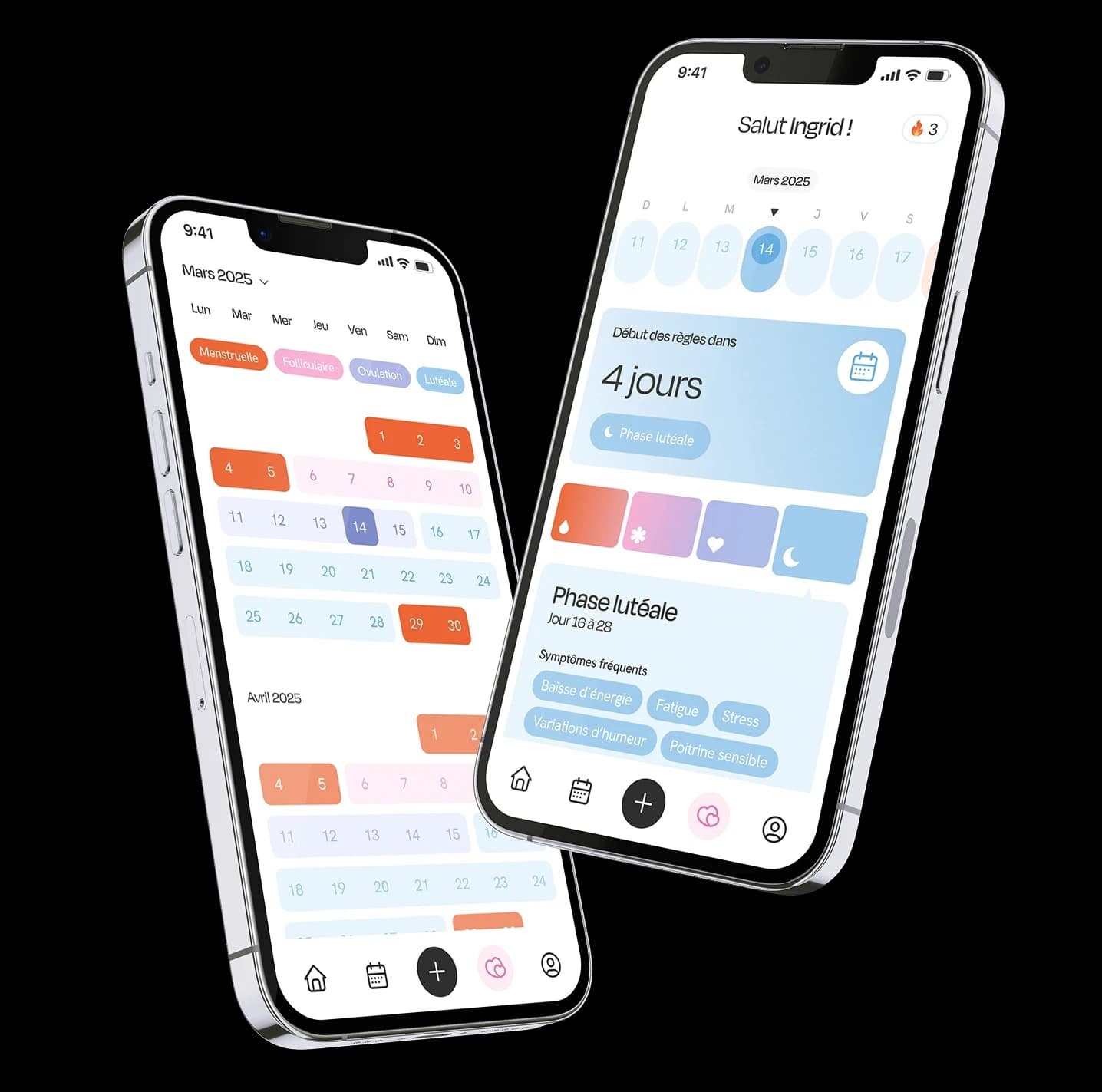
Wenly : The cycle tracking app for couples
It was with this in mind that Wenly was created : the first French menstrual cycle tracking app designed with the couple in mind. Wenly makes it easy to track your cycle, understand its phases and associated symptoms, and share key information with your partner without having to explain every detail.
The goal is clear: to transform menstrual tracking into a tool for mutual understanding and communication.