

Remembering to take the pill every single day, booking the gynaecologist, managing side effects, keeping an eye on your cycle, rushing to the pharmacy before the weekend… Behind the slightly clinical phrase contraceptive burden lies a very concrete, and very lopsided, reality: in the vast majority of heterosexual couples, it's the woman who carries, alone, the responsibility of preventing a pregnancy.
This isn't just a feeling. Research on the subject, including work by the ANSIRH at the University of California, describes how the work of preventing pregnancy falls disproportionately on women and people who can become pregnant. This article looks that burden in the eye: what it really involves, what the data shows, and above all how a couple can rebalance it, without guilt and without finger-pointing.
What is the contraceptive burden?
The contraceptive burden is all the work, visible and invisible, tied to preventing an unplanned pregnancy. It's far more than swallowing a tablet. It includes:
The physical cost: putting up with the effects of hormonal contraception (mood, libido, bleeding), having an IUD fitted, recovering from a procedure.
The mental and logistical cost: thinking about it every day, renewing the prescription, anticipating stock shortages, booking and keeping appointments.
The emotional cost: managing the fear of a missed pill, the anxiety of a late period, the decision-making when something goes wrong.
It's a version of the mental load, applied to sex and reproduction. And like the mental load at home, it weighs all the more heavily because it's rarely named.
What the numbers say
The data shows just how far the balance tips to one side. In France, according to the Contexte des sexualités en France 2023 survey relayed by Santé publique France, among women using contraception 64.4% rely on a medicalised method, mainly the IUD (27.9%) and the pill (26.6%), ahead of sterilisation (5.2%) and the implant (4.3%). Every one of these methods rests on the woman's body.
By comparison, the condom, the only widely used male method, accounts for just 18.2% of use. In other words, most contraception runs through women's bodies and women's follow-up. As France's national statistics institute, the Insee, notes, this dominance of female methods keeps alive the idea that contraception is, by nature, "a women's matter."
Part of this imbalance comes down to history and to what's on offer: male methods remain few. But it's also kept in place by couple habits, and that's exactly where things can shift.
A mental load, not just a physical one
The least visible part is often the heaviest. What tires you out isn't so much the act of using contraception as thinking about it constantly. Studies find that women spend considerably more time and mental energy than their partner managing contraception, and report more stress around these decisions.
This load is all the more invisible because it's so often absorbed as "normal." Many women no longer even think to share it, and many partners simply don't know it exists. And you can't support what you can't see.
Why it's the partner's business too
Putting the subject on the table doesn't mean assigning blame. The imbalance is first of all structural, tied to the methods available and to decades of habit. But within a couple, contraception really is a shared decision: it involves both people's sex life, a possible future child, and the wellbeing of the person carrying it.
The research also points to good news: in established relationships, both partners say they're more open to sharing this responsibility. And sharing the contraceptive burden doesn't necessarily mean changing method. It starts with naming it and taking care of it together.
How to share it, in practice
A few simple levers help rebalance the load, even when the method itself stays female:
Talk about it openly. Naming the burden is already sharing it. Asking "how are you finding your contraception at the moment?" opens a door many couples have never walked through.
Split the logistics. The partner can take charge of the pharmacy run, or setting reminders for appointments.
Take an interest in the cycle. Understanding the phases of the cycle, knowing when the fertile window falls, tracking symptoms together: this turns the partner into an ally and eases the solo vigilance.
Consider male methods. Condoms, of course, but also vasectomy for couples who don't want more children. These are concrete ways to rebalance.
Share the decisions. Choosing or changing a method, reacting to a missed pill or a late period: these moments are better thought through together than carried by one person.
If you're going through a transition right now, our article on coming off the pill explores these questions from a similar angle, that of a change to prepare together.
Frequently asked questions
What exactly is the contraceptive burden?
It's all the physical, mental, logistical and emotional work tied to preventing a pregnancy: thinking about it, managing effects, appointments, costs and decisions. Today it falls overwhelmingly on women.
Why does it fall mostly on women?
Largely because most available methods are female: in France, more than 60% of women use a medicalised method, versus much lower condom use. Cultural habits that frame contraception as "a women's matter" add to this.
How can a man share the contraceptive burden?
By informing himself, taking on part of the logistics (pharmacy, reminders), taking an interest in his partner's cycle, using condoms or, depending on the couple's plans, considering a vasectomy.
Are there male contraceptive options?
Yes, but the range is limited: mainly condoms and vasectomy (permanent). Other methods exist or are being studied, but they're not yet widely available. So the imbalance is partly a question of what's on offer.
Sources: Santé publique France — Insee — ANSIRH
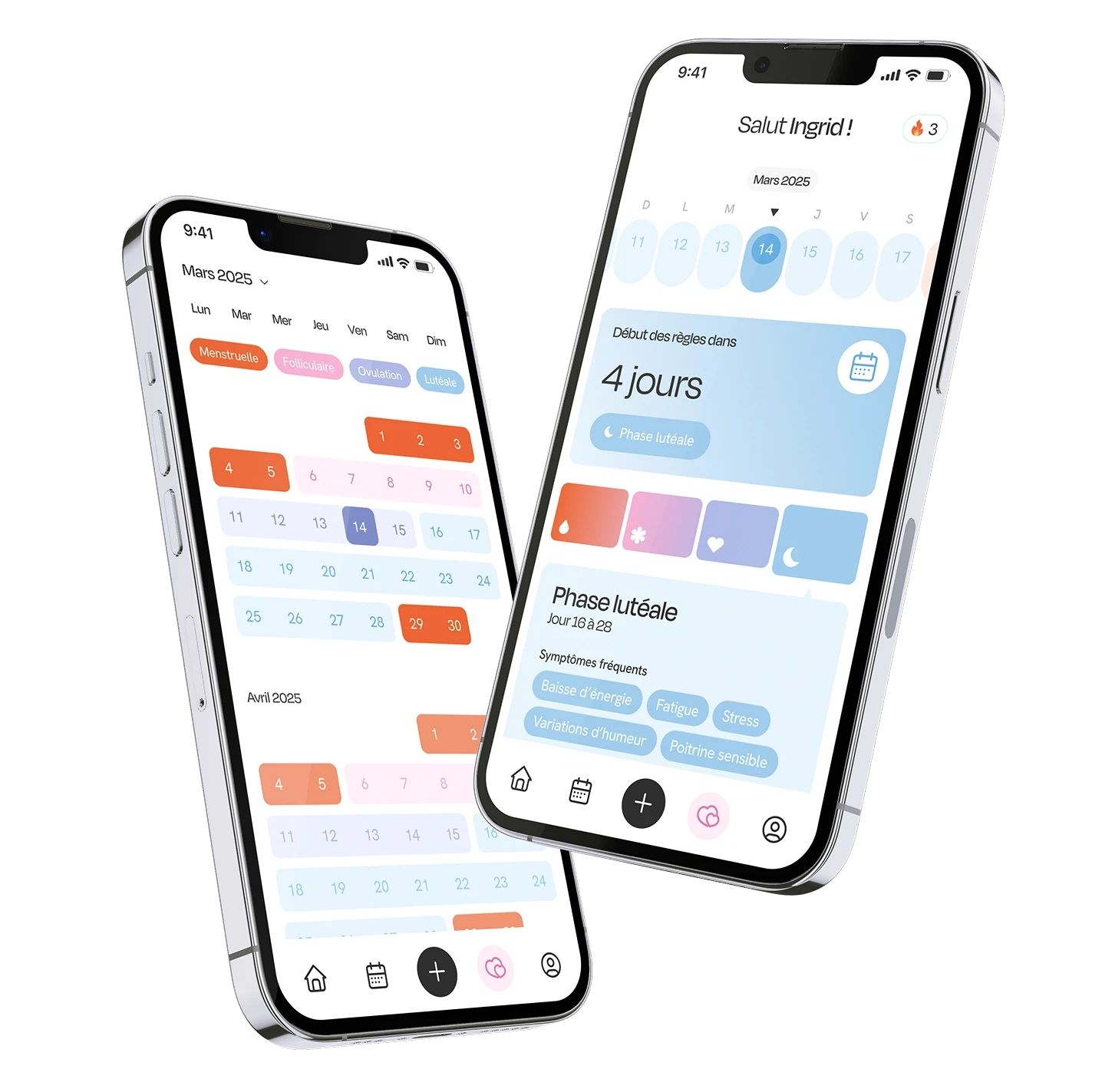
Sharing the contraceptive burden starts with making it visible. With Wenly, you can track the cycle and symptoms together, so contraception becomes a couple's conversation rather than one person's solo vigilance, and each of you knows where the other stands.