

Couple
Male Contraception: What's Available Today, and What's Coming
Condom, vasectomy, hormonal and thermal methods: a clear, sourced look at male contraception, to consider as a couple.
For decades, contraception has been treated as a women's affair. That's changing: more and more men and couples are looking into male contraception, to better share a responsibility that still falls overwhelmingly on one body. But between the methods that are actually available and those still in development, it's easy to get lost.
This article lays it out clearly, without activism: what exists and is validated today, what's still at the research stage, and what each couple can do with it. The goal isn't to name a "best" method, but to give you reliable markers to talk it through together and, if you wish, with a healthcare professional.
Available, validated methods
Today, two male methods are widely recognised, accessible and proven.
The condom
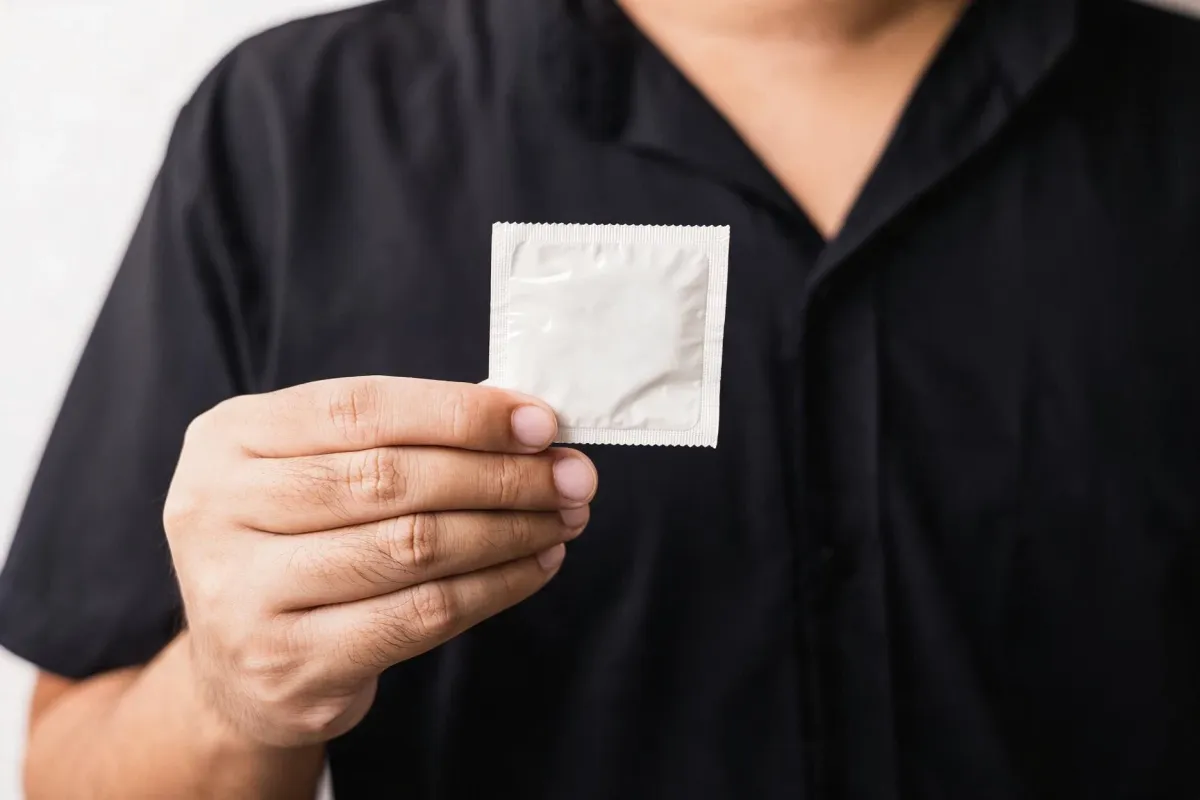
It's the best-known male method, and the only one that does two jobs at once: preventing pregnancy and protecting against sexually transmitted infections. Used correctly and every time, it's reliable. Its main strength is simplicity: no prescription, no procedure, no hormones. It's often the first concrete way for a man to take part in the couple's contraception.
Vasectomy
Vasectomy is a permanent method, for adults and designed for those who no longer want (or don't want) children. It involves cutting or sealing the vas deferens during a small outpatient procedure under local anaesthetic. In France, according to the Assurance Maladie, it requires a legal four-month reflection period and is covered by the health system.
Its effectiveness is very high, around 99.9%. Two things are worth knowing: it doesn't work immediately (another method is needed for about 8 to 16 weeks, until a semen analysis confirms the absence of sperm) and it should be considered permanent. A reversal is sometimes possible, but success isn't guaranteed. As a sign of changing times, vasectomy has risen sharply in France in recent years.
A useful note: withdrawal (coitus interruptus) is sometimes presented as a male method. In practice, it's unreliable for preventing pregnancy and offers no protection against infections. It can't be considered a contraceptive method in its own right.
Emerging methods, still in development
This is where precision matters, because enthusiasm often runs ahead of the science. Several avenues exist, but none is currently validated or marketed as routine contraception in France.
Male hormonal contraception
In principle, it relies on hormones that pause sperm production, a little like the female pill blocks ovulation. In France it's practised in a limited way, through injections, under specialised medical supervision. It has no marketing authorisation as a contraceptive, and other forms (tablets, gels) are being studied but aren't yet available.
Thermal contraception (heated underwear, ring)
The principle is physiological: keeping the testicles at a slightly higher temperature reduces sperm production. It uses adapted underwear or a ring. It's a serious approach, studied for years, but its regulatory status calls for caution.
By a decision in December 2021, France's medicines agency, the ANSM, suspended distribution of the Andro-switch contraceptive ring, citing insufficient clinical data to demonstrate its efficacy and safety. The agency stresses that the risk of unwanted pregnancy can't be ruled out. In practical terms, these devices are not validated contraceptives, and their use today falls within the framework of a clinical trial. If the subject interests you, the only sound approach is to discuss it with a doctor, not to make or use a device on your own.
A decision to think through together
Taking an interest in male contraception already means recognising that contraception shouldn't rest on one person. Whether the choice is the condom, a vasectomy for a couple who no longer want children, or simply an open conversation about it, what matters is making it a shared decision, suited to your plans and your situation.
This rebalancing is at the heart of what we call the contraceptive burden: simply opening the conversation, learning about the options together and considering them already lightens the load for the person who, until now, carried it all alone.
Frequently asked questions
Which male contraceptives actually exist?
Two methods are validated and accessible: the condom and vasectomy. Hormonal and thermal methods remain in development and aren't marketed as routine contraceptives.
Is vasectomy reversible?
It should be considered permanent. A reversal procedure exists but success isn't guaranteed. That's why a legal four-month reflection period applies.
Are the ring and heated underwear reliable?
Their efficacy and safety aren't established by sufficient clinical data. The ANSM suspended distribution of the Andro-switch ring in 2021. These methods are not validated contraceptives and belong to a research setting.
Does male hormonal contraception exist in France?
It's practised in a very limited way, by injection, under specialised medical supervision, but it has no authorisation as a mainstream contraceptive.
Does the condom also protect against STIs?
Yes. It's the only contraceptive method that protects against both pregnancy and sexually transmitted infections.
Sharing contraception starts with talking about it. With Wenly, you can track the cycle and discuss your contraception together, turning these choices into a real couple's decision rather than a load carried alone.

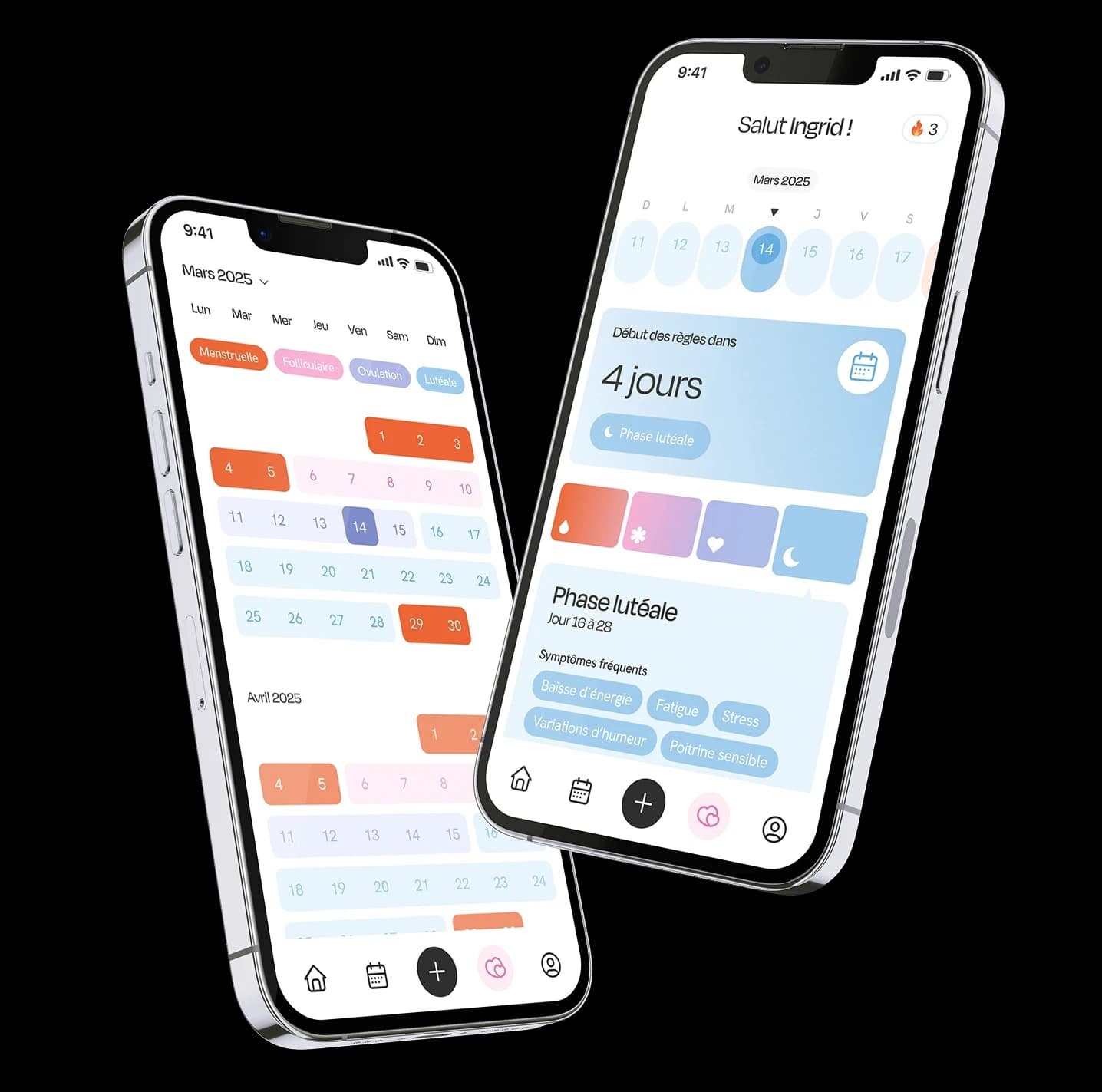
Wenly : The cycle tracking app for couples
It was with this in mind that Wenly was created : the first French menstrual cycle tracking app designed with the couple in mind. Wenly makes it easy to track your cycle, understand its phases and associated symptoms, and share key information with your partner without having to explain every detail.
The goal is clear: to transform menstrual tracking into a tool for mutual understanding and communication.