

Pain during sex is something we rarely talk about, often out of embarrassment or resignation. Many women end up believing it's "normal," or that the pain is all in their head. It's neither. Painful sex, which doctors call dyspareunia, almost always has an identifiable cause, and most of the time, solutions.
This article approaches an intimate subject with honesty and gentleness: what dyspareunia really is, its possible causes, why you shouldn't suffer it in silence, and how to talk about it, both with a healthcare professional and with your partner. Because this pain, even when it's felt in one body, concerns the whole couple.
What is dyspareunia?
Dyspareunia is genital pain felt before, during or after sex. There are generally two forms: superficial pain, at the entrance of the vagina or around the vulva, and deep pain, felt further in, often on full penetration. This distinction isn't a detail: it points toward different causes.
Far from rare, dyspareunia is common. As the NHS notes, many women experience it at some point in their lives. It can be temporary or settle in over time, and its intensity ranges from mild discomfort to pain that makes sex impossible.
Real, physical causes
In the vast majority of cases, the pain has a physical origin that can be treated:
Vaginal dryness. One of the most common causes. A lack of lubrication, linked to hormones, stress or insufficient arousal, creates painful friction.
Infections. Thrush, a urinary infection or a sexually transmitted infection can inflame the tissues and make sex painful.
Menopause. Falling oestrogen levels dry out and thin the vaginal lining, a very common cause after 50.
Endometriosis. This gynaecological condition is a classic cause of deep pain, and affects a significant share of women who experience dyspareunia.
Vaginismus. An involuntary tightening of the muscles around the vagina, which makes penetration painful or even impossible.
Local irritation. Certain soaps, hygiene products, spermicides or even the latex in condoms can trigger reactions.
Identifying the cause is the first step toward relief, which is why it's worth seeing a professional rather than getting used to the pain.
When the mind gets involved
Body and mind don't work in silos. Pain felt once often creates apprehension: fearing pain, the body tenses, arousal drops, lubrication with it, which increases the pain next time. A cycle sets in, where fear feeds the pain, and the pain feeds the fear.
This doesn't mean the pain is "imaginary." Quite the opposite: it's very real, and this psychological dimension is an integral part of the problem, one to factor into care, without ever blaming the person who suffers from it.
It's neither normal nor inevitable
If there's one message to take away, it's this: pain during sex is not something to endure. As the NHS points out, pain during or after sex is your body's way of telling you something, and shouldn't be ignored. And here's the good news: with the right care, the chances of getting back to an enjoyable sex life are good, even if treatment can take a few months.
Depending on the cause, solutions vary: lubricants (water-based if you use condoms), treating an infection, local hormones for menopause-related dryness, pelvic floor rehabilitation with a specialised physiotherapist, or support from a sex therapist when the emotional side is central.
Talking about it as a couple
Dyspareunia often comes with a shared silence. The person in pain fears disappointing or "depriving" the other; the partner doesn't dare push, afraid of causing pain, and sometimes reads the withdrawal as rejection. This unspoken tension does as much damage as the pain itself.
A few markers help break the silence:
Name the pain rather than avoiding it. Saying "it hurts here, not tonight" is better than a refusal with no explanation.
Broaden intimacy. Sex isn't limited to penetration: tenderness, touch and other forms of pleasure remain possible during treatment.
Move forward as a team. Understanding that the pain has a medical cause turns the partner into an ally, not a helpless bystander.
When to see a doctor
As soon as the pain repeats or settles in, seeing a professional is warranted. A GP, a gynaecologist, a midwife or a sexual health clinic can look for the cause and suggest a suitable solution. Don't wait for the situation to become a burden: the earlier the care, the easier the pain-fear cycle is to break.
Frequently asked questions
Is pain during sex normal?
No. Repeated pain during sex isn't normal and shouldn't be endured. It almost always has an identifiable cause, and solutions exist.
Is painful sex "all in your head"?
No. Dyspareunia usually has a physical cause. An emotional dimension (apprehension, stress) can add to it, but the pain is very real and deserves to be taken seriously.
What are the most common causes?
Vaginal dryness, infections, menopause, endometriosis and vaginismus are among the most common causes.
What can I do while waiting to see a doctor?
A water-based lubricant can ease dryness-related pain, and broadening intimacy beyond penetration helps the couple. But this doesn't replace medical advice if the pain persists.
Who should I see about painful sex?
A GP, a gynaecologist, a midwife or a sexual health clinic. A specialised physiotherapist or a sex therapist may also help, depending on the cause.
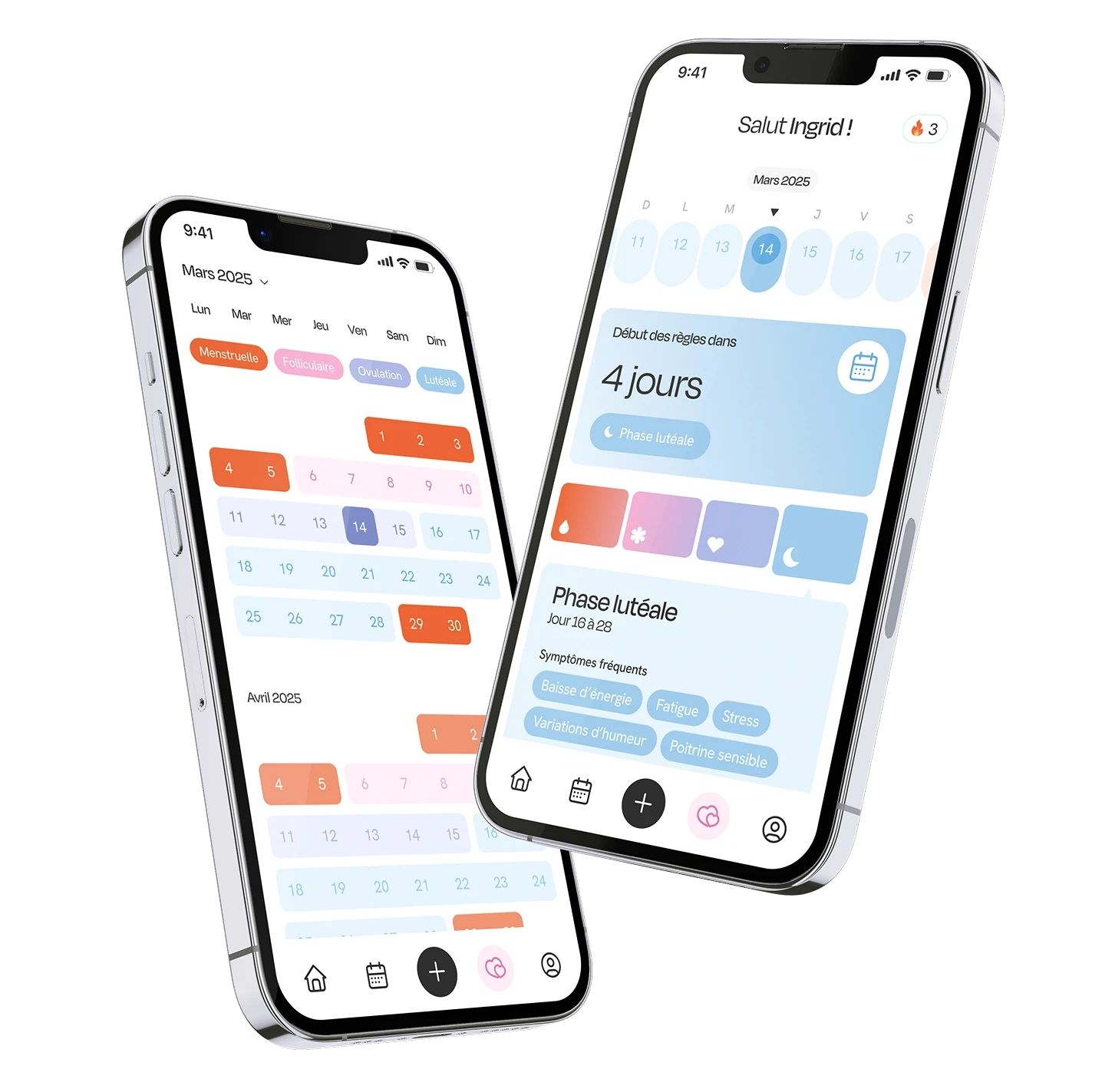
Understanding your body and daring to talk about it changes everything. With Wenly, you can track your symptoms and share that tracking with your partner, to turn a difficult subject into a couple's conversation and walk into an appointment with concrete markers.