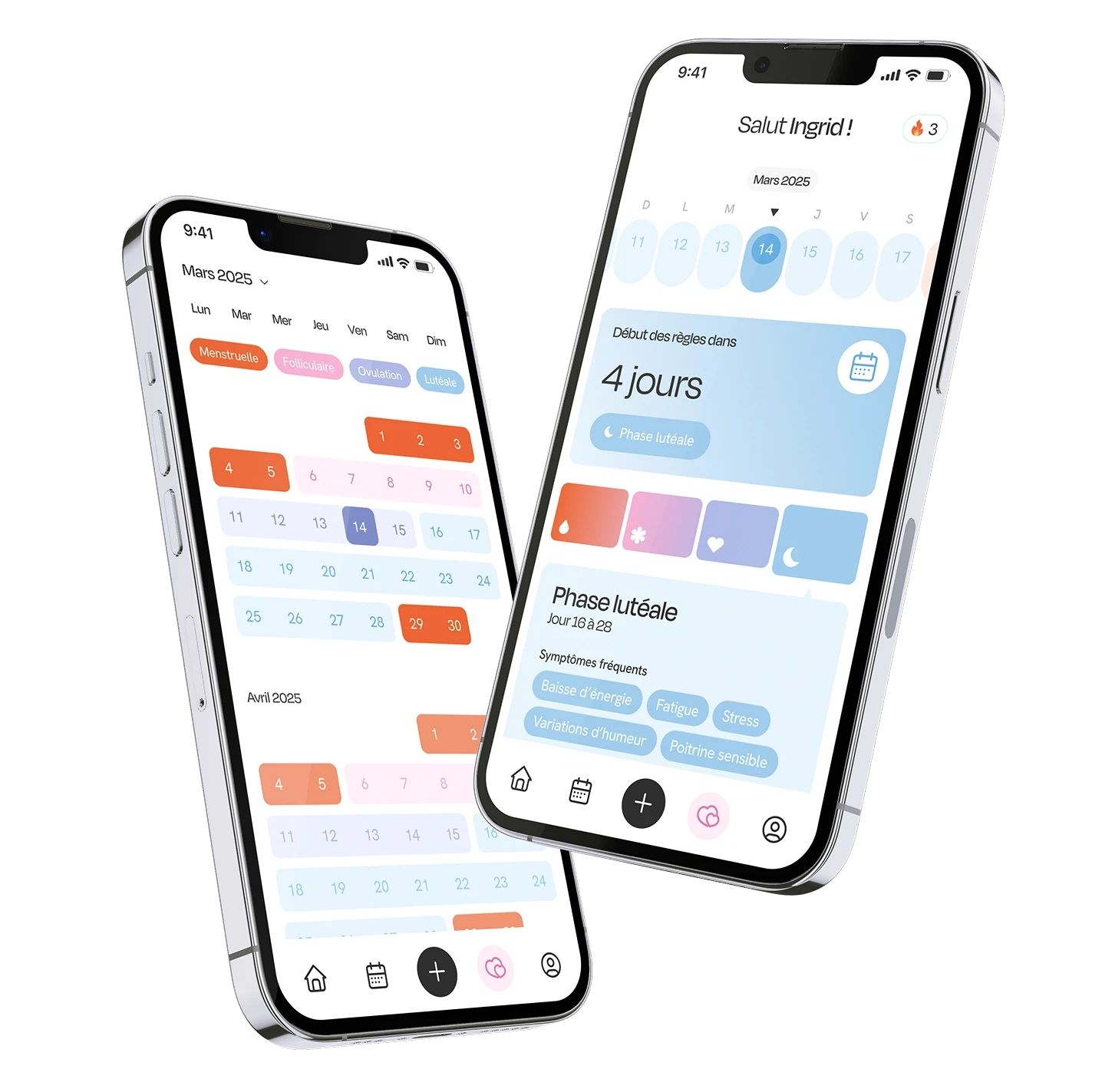


Cycles that never seem to land on the same date, persistent adult acne, more hair growth than average… If these symptoms sound familiar, you may have already come across the term PCOS, polycystic ovary syndrome (recently renamed PMOS). It's the most common hormonal condition among women of reproductive age, and yet it remains widely misunderstood, under-diagnosed, and a source of a lot of needless worry.
This article lays it out clearly, without drama: what PCOS really is, its symptoms, its causes, how it's diagnosed, and the treatment options available. The goal is to give you reliable markers, whether you're still wondering or already diagnosed.
PCOS, more common than you'd think
PCOS affects around one in ten women of reproductive age, according to the Endocrine Society, making it the most common hormonal condition in this population. Its name, historically centred on ovarian "cysts," is misleading: what imaging actually shows are small immature follicles, not true cysts. That's precisely why the condition was renamed polyendocrine metabolic ovarian syndrome (PMOS).
This new name better reflects reality: PCOS isn't just an ovary story, it's a hormonal and metabolic condition that affects several of the body's systems at once.
Symptoms to know
PCOS shows up differently from one woman to another, which partly explains why it can be tricky to identify. The most common signs include:
Irregular cycles or absent periods, linked to ovulation problems.
Excess hair growth (hirsutism), affecting around 70% of women with the condition.
Persistent acne and sometimes hair thinning.
Difficulty conceiving, linked to irregular or absent ovulation: PCOS is the leading cause of female infertility.
Weight gain or insulin resistance, present in many affected women.
None of these symptoms, on its own, automatically means PCOS. It's their combination, confirmed through testing, that leads to a diagnosis.
What causes PCOS?
The causes are multifactorial and not fully understood. Research has identified around 20 predisposition genes, but these explain less than 10% of cases. Epigenetic and environmental factors also play a role, and obesity can contribute to or worsen symptoms, without being the sole cause.
An important point: PCOS is nobody's fault. It isn't the result of poor lifestyle choices, nor something you could have prevented.
How is it diagnosed?
Diagnosis relies on the Rotterdam criteria, an international consensus. At least 2 of the following 3 criteria must be present:
Ovulation problems (irregular or absent cycles).
Signs of hyperandrogenism, clinical (excess hair, acne) or biological (blood hormone tests).
A polycystic appearance of the ovaries on ultrasound (at least 20 follicles measuring 2 to 9 mm, or increased ovarian volume).
This process usually involves a gynaecology appointment, a blood test and a pelvic ultrasound, ideally transvaginal for greater accuracy. If you suspect PCOS, talking to your GP or a gynaecologist is the first step.
What treatment options exist?
Good news: PCOS can be managed, and care is tailored to each situation, depending on symptoms and life plans (contraception, wanting a pregnancy, managing acne or excess hair). It's generally holistic and multidisciplinary:
Lifestyle measures, particularly regular physical activity, play a central role, especially for insulin resistance.
Hormonal contraception can regulate cycles and reduce acne and excess hair.
Medication, such as metformin in some cases, may be offered for its metabolic effects.
Fertility support, if trying to conceive, can often help stimulate ovulation with good results.
PCOS is a chronic condition, but it doesn't define your life or your long-term fertility. Many women with PCOS lead fully thriving lives and fertility journeys, with the right follow-up care.
Frequently asked questions
Does PCOS prevent you from having children?
No, but it can make conception harder by disrupting ovulation. With medical support, many women with PCOS go on to conceive.
Is PCOS caused by being overweight?
No. Being overweight can worsen some symptoms, but it isn't the cause of PCOS. Slim women can be affected too.
How do I know if I have PCOS?
Only a medical diagnosis, based on the Rotterdam criteria (irregular cycles, signs of hyperandrogenism, ultrasound appearance), can confirm PCOS.
Can PCOS be cured?
There's no treatment that permanently cures PCOS, but symptoms can be managed very well with the right care (lifestyle, hormonal or medical treatments as needed).
Why is PCOS now called PMOS?
The new name better reflects the reality of the condition, which is hormonal and metabolic, not just ovarian. Find all the details in our article on PCOS being renamed PMOS.
Understanding your body is already a way of taking back some control. With Wenly, you can track your cycles and symptoms day to day, and share that tracking with your partner, to walk into every appointment with concrete information rather than vague impressions.