

Menstrual cycle
Premenstrual Syndrome (PMS): Understanding and Easing Those Days
Irritability, bloating, tender breasts before your period: understanding premenstrual syndrome (PMS), easing it, and getting through it together.

Irritability rising for no reason, tender breasts, a bloated belly, a mood on a rollercoaster… then your period arrives, and everything settles. If that scenario feels familiar, you already know premenstrual syndrome, more commonly called PMS. Far from being made up or a whim, it's a very common physiological phenomenon, linked to the hormonal shifts at the end of the cycle.
This article explains what PMS is, its symptoms, how to ease it, and when it's worth taking seriously. We'll also see why, as so often with the cycle, an informed partner makes a real difference.
What is premenstrual syndrome?
PMS refers to the physical and emotional symptoms that appear in the days before your period, during the luteal phase of the cycle, and usually fade soon after it starts. It's this cyclical pattern that defines it: the symptoms return with each cycle, always at the same point.
It's extremely common. According to the NHS, the large majority of women experience premenstrual symptoms at some point. Their intensity varies widely: annoying but manageable for some, genuinely disabling for others.
Physical and emotional symptoms
PMS isn't just about "mood." To varying degrees, it combines two broad families of symptoms:
Physical: tender, painful breasts, bloating, temporary weight gain from water retention, headaches, fatigue, lower abdominal pain.
Emotional and behavioural: irritability, mood swings, anxiety, sadness, low motivation, a wish to withdraw or to eat differently.
The exact cause isn't fully understood, but it's closely linked to the hormonal shifts at the end of the cycle, particularly the drop in oestrogen and progesterone before the period. Some factors, such as smoking or an unbalanced lifestyle, seem to worsen the symptoms.
PMDD, a severe form not to be dismissed
In a minority of women, the symptoms, especially the emotional ones, are so intense that they upend daily life, work and relationships. This is called premenstrual dysphoric disorder (PMDD), a severe form affecting around 5% of women.
PMDD isn't "just bad PMS" to be brushed off: it's a recognised disorder, with real psychological distress, that warrants specific medical care. If the days before your period come with significant distress, it's essential to talk to a professional.
How to ease PMS
There's no single fix, but several levers genuinely help, often in combination:
Lifestyle. Regular physical activity, enough sleep and a balanced diet (limiting salt, sugar, caffeine and alcohol late in the cycle) can ease symptoms.
Stress management. Relaxation, breathing, calming activities: stress often amplifies PMS.
Tracking your symptoms. Noting how you feel, cycle after cycle, helps you anticipate the sensitive days and confirm the link with your cycle, valuable information for an appointment.
Medical advice. When PMS weighs on daily life, a doctor can suggest suitable solutions. As the NHS points out, don't hesitate to seek help when symptoms affect everyday life.
The partner's role
PMS rarely plays out solo. The tension, irritability or fatigue at the end of the cycle can spill into the relationship, especially when they're misunderstood. The worst response is to wave the subject away with "it's just your hormones": minimising only adds misunderstanding to the discomfort.
Conversely, a partner who knows the rhythm of the cycle can anticipate these more sensitive days, show more patience, and offer support at the right time. Tracking the cycle together turns PMS into something you get through as a team, rather than a recurring source of misunderstanding. This has nothing to do with an excuse: it's simply about understanding each other better.
Frequently asked questions
What exactly is PMS?
It's the set of physical and emotional symptoms that occur in the days before your period and fade soon after it starts. It's linked to the hormonal shifts at the end of the cycle.
How long does premenstrual syndrome last?
Symptoms usually appear in the days before the period and ease within the hours or days following its start.
Is PMS serious?
Usually not, though it can be bothersome. A severe form, premenstrual dysphoric disorder (PMDD), affects around 5% of women and warrants medical care.
How can I ease the symptoms?
A good lifestyle (exercise, sleep, balanced diet), stress management and tracking your symptoms often help. If the impact is significant, medical advice is recommended.
When should I see a doctor about PMS?
As soon as the symptoms affect your daily life, work or relationships, or if they come with significant emotional distress.
Living better with PMS starts with understanding and anticipating it. With Wenly, you can track your symptoms across the cycle and share that tracking with your partner, to turn these sensitive days into a stage you get through together, more gently.

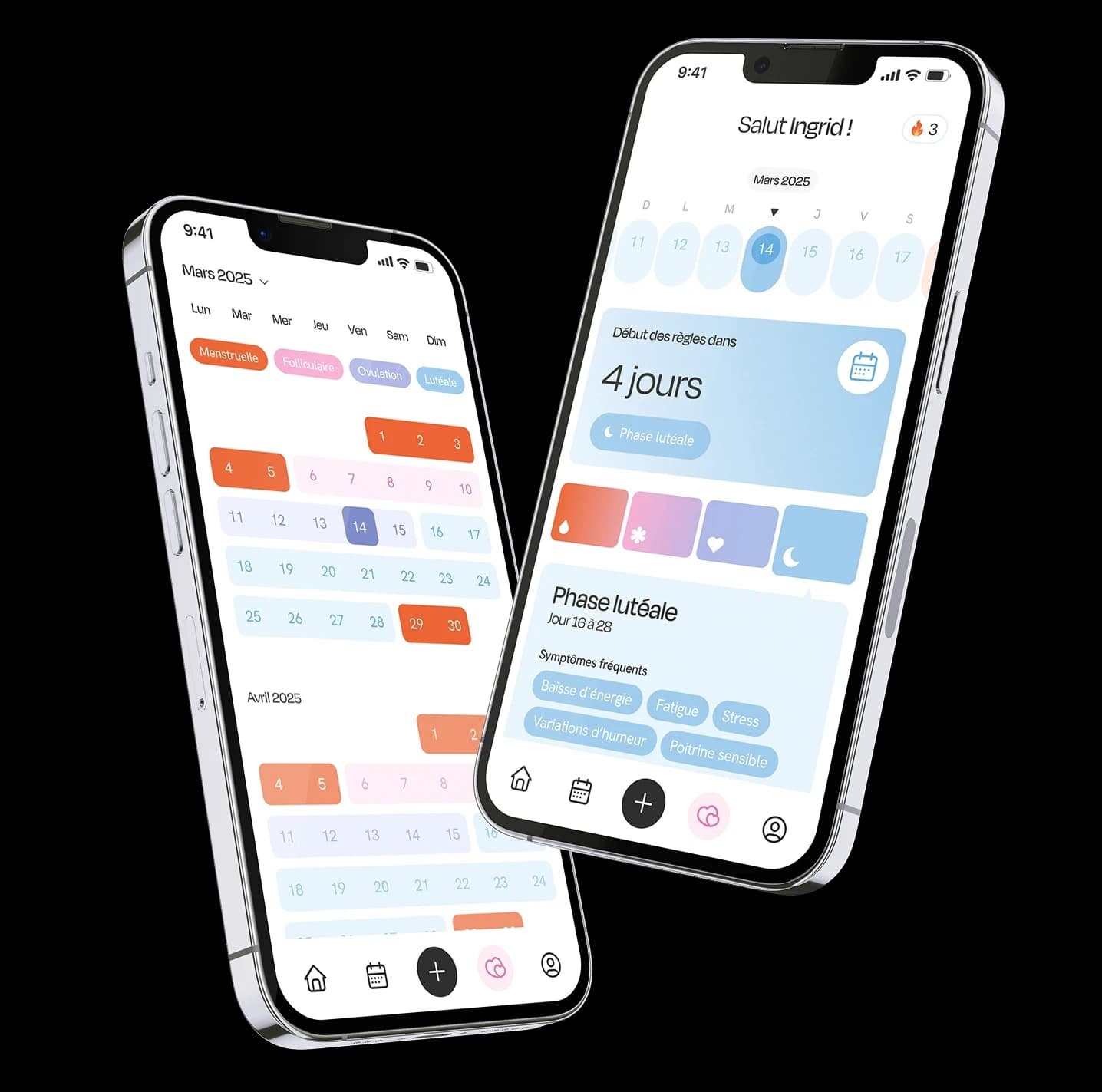
Wenly : The cycle tracking app for couples
It was with this in mind that Wenly was created : the first French menstrual cycle tracking app designed with the couple in mind. Wenly makes it easy to track your cycle, understand its phases and associated symptoms, and share key information with your partner without having to explain every detail.
The goal is clear: to transform menstrual tracking into a tool for mutual understanding and communication.