

Partner
How the Cycle Affects Your Partner's Mood (and How to Respond)
Irritability, energy, sensitivity: why mood shifts with the cycle, and how to support without minimising or over-explaining.
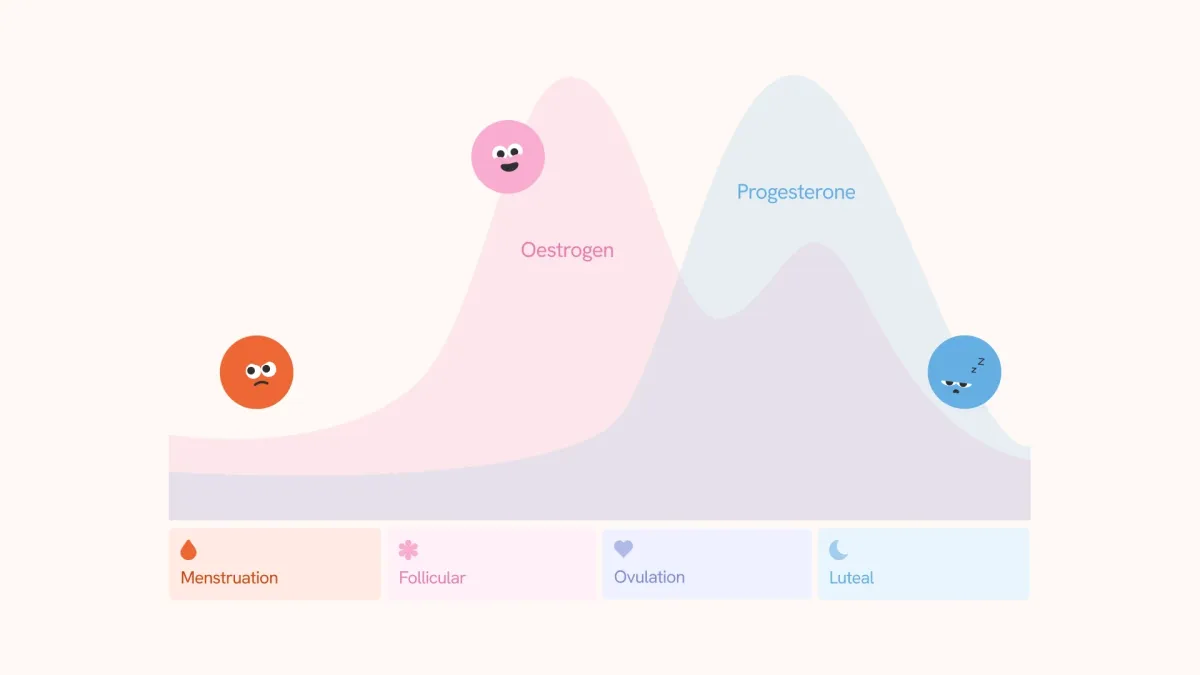
One week she's full of energy, the next everything seems to irritate her faster than usual. If you've noticed this kind of shift in your partner, know that it's neither random nor "all in her head." Mood is partly linked to the hormones of the menstrual cycle, which change throughout the month and directly influence the brain.
This article explains that mechanism simply, without turning it into a ready-made excuse or a reason to minimise what she's feeling. The goal: understanding in order to support her better, not to label every emotion as "hormonal."
The link between hormones and mood, explained simply
The phases of the menstrual cycle are regulated by hormones, mainly oestrogen and progesterone. These hormones don't just act on the ovaries: they also influence brain neurotransmitters like serotonin and dopamine, directly tied to mood regulation.
In practice, when oestrogen levels shift sharply, the production of these neurotransmitters shifts too, which can translate into very real changes in energy, sensitivity or irritability. It isn't fragility or a lack of control: it's a biological mechanism that affects most women, to varying degrees.
What happens, phase by phase
The patterns observed broadly follow the rhythm of hormones, even though the intensity varies enormously from woman to woman:
During her period, hormones are at their lowest, which can come with fatigue or low mood, on top of physical discomfort.
In the follicular phase, rising oestrogen boosts serotonin: this is often when energy and mood are at their most stable, or even their best.
Around ovulation, hormones peak, which can bring a burst of vitality, and sometimes brief irritability for some women.
In the luteal phase, especially in its final days, falling oestrogen and progesterone can bring irritability, sadness or heightened emotional sensitivity. This is the period associated with premenstrual syndrome (PMS), which affects a large share of women of reproductive age.
These are general patterns, not a strict rule. Some women feel very pronounced shifts, others barely any.
Understanding isn't excusing (or minimising)
This is the most important point in this article. Knowing that hormones influence mood doesn't mean every emotion should be traced back to the cycle, or that legitimate frustration suddenly becomes "less valid" because it happens to fall in the luteal phase.
Saying "it's just your hormones" in response to anger or sadness, even when the timing lines up with the cycle, is one of the most invalidating things you can say. It implies the feeling isn't founded, when an emotion remains an emotion, even if a hormonal context amplifies it. The right approach is to take in what's being expressed, without trying to dismiss it by pointing to its supposed cause.
How to respond in practice
A few simple habits help you both get through these shifts:
Notice patterns without locking them in. Anticipating that a period may be more sensitive helps you adjust your patience, without automatically expecting a reaction.
Listen before solving. Faced with irritability or sadness, listening usually matters more than jumping to a solution.
Never use the cycle as an argument in an argument. Bringing up hormones during a disagreement derails the real conversation and builds lasting resentment.
Adjust the pace, not the emotional commitment. Offer a calmer moment if she needs one, without emotionally withdrawing from the relationship.
When it goes beyond the cycle
If mood shifts are intense, persistent, and significantly disrupt daily life, it may be premenstrual dysphoric disorder (PMDD), a severe form of PMS that requires medical support. In that case, gently encouraging her to see a doctor or a gynaecologist is the most helpful thing you can do.
Frequently asked questions
Do all women experience cycle-related mood changes?
Not in the same way. Hormonal patterns exist in everyone, but their impact on mood varies enormously from woman to woman.
Why is irritability more common before a period?
Falling oestrogen and progesterone late in the cycle affects serotonin production, a neurotransmitter tied to mood regulation.
Is it okay to say "it's your hormones" when she's upset?
Better to avoid it. Even if the hormonal link exists, this phrase minimises what she's feeling and is often experienced as invalidating.
How do I know if it's PMS or something else?
PMS follows a cyclical pattern, always at the same point in the cycle, and eases once the period starts. Mood changes that stay constant, unrelated to the cycle, likely have another cause.
When should I be concerned?
If the shifts are intense, persistent, and seriously affect daily life or relationships, medical advice is recommended, particularly to rule out premenstrual dysphoric disorder.
Understanding your partner's rhythm means supporting her better, without ever minimising what she feels. With Wenly, you can track her cycle together and anticipate the more sensitive stretches, adjusting how you show up without ever reducing her emotions to a simple hormonal explanation.

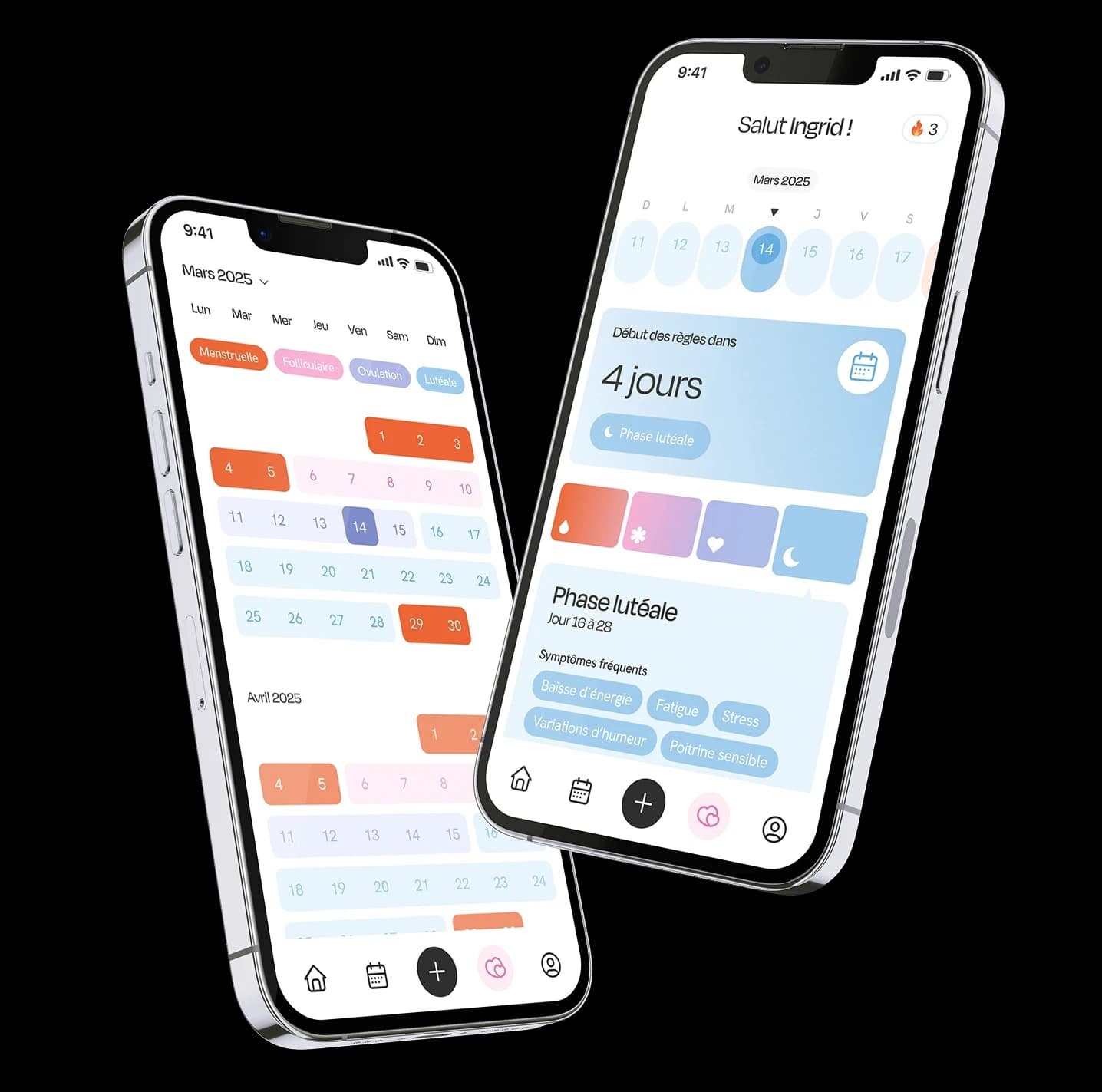
Wenly : The cycle tracking app for couples
It was with this in mind that Wenly was created : the first French menstrual cycle tracking app designed with the couple in mind. Wenly makes it easy to track your cycle, understand its phases and associated symptoms, and share key information with your partner without having to explain every detail.
The goal is clear: to transform menstrual tracking into a tool for mutual understanding and communication.