

Fertility
Trying for a Baby: How Long Does It Really Take?
About 7 months on average, but it varies hugely. The real numbers on conception timelines, so you can wait without the anxiety.

You've stopped your contraception, you're watching for every sign, and another month goes by with no news. If this is where you are, one question is probably on a loop: "how long is this going to take?" It's one of the most common worries for couples starting a journey to have a baby, often fuelled by extreme stories, both good and bad.
This article draws on real numbers, from population studies, to give you realistic markers. The goal isn't to reassure you at any cost, but to replace anxiety with accurate information, one you can go through together rather than in solo waiting.
The average timeline: longer than you'd think
Contrary to a common belief, conception rarely happens in the very first month. According to data from INED (France's national institute for demographic studies), it takes a couple about seven months on average to conceive. But that average hides huge variability:
25% of couples conceive in the first month of trying.
60% succeed within the first 6 months.
75% within the first 9 months.
85 to 90% within the first 12 months.
In other words, 3 out of 4 couples conceive within their first year of trying. Not succeeding in the first few months is far from unusual: it's actually the situation for most couples.
Age, a factor that matters
The time it takes to conceive rises gradually with the woman's age. It's around 3 to 5 months for a young woman, about 8 months at age 35, and can exceed a year at 40. This shift is linked to the natural decline in ovarian reserve over time.
That doesn't mean pregnancy after 35 or 40 is hard for everyone: it's a population-level trend, not an individual prediction. But it's useful information for calibrating expectations and, if needed, not waiting too long before seeking advice.
Giving yourselves the best chances
Beyond patience, a few concrete steps improve the odds each cycle:
Spot your fertile window. Having regular sex in the days before and during ovulation maximises your chances each cycle.
A healthy lifestyle. A balanced diet, regular physical activity, quitting smoking and limiting alcohol support fertility, for both partners.
Contraception stopped early enough. If you've just come off the pill, give your cycle time to find its natural rhythm; this doesn't stop you from trying, but it can explain a slightly longer timeline at the start.
When to see a doctor
The medical definition of infertility is clear: the inability to achieve pregnancy after one year of regular, unprotected sex. The NHS recommends speaking to a GP if you've been trying for a year or more without success.
This timeline shortens with age: it's generally advised to seek advice after 6 months of unsuccessful trying from age 35, and even earlier after 40. And good news for couples who haven't conceived after a year: half of them go on to conceive naturally the following year.
Seeing a doctor early is never a mistake, even before these timelines, if the waiting causes significant anxiety or if either partner has a relevant medical history.
Getting through the wait together
Waiting for a pregnancy can weigh heavily, especially alongside social pressure or comparisons with people around you. This is where being two in the project makes all the difference: sharing information, tracking the cycle together, and supporting each other through the months when doubt creeps in.
Keeping the real numbers in mind helps put things in perspective: not conceiving within three months is neither a failure nor a sign something's wrong. Very often, it's simply how long it normally takes.
Frequently asked questions
How long does it take on average to get pregnant?
About 7 months on average, but with huge variability: 25% of couples conceive in the first month, and 85 to 90% within the year.
When is it considered infertility?
After a year of regular, unprotected sex without pregnancy, for a woman under 35. This shortens to 6 months after 35.
Does age really affect the time it takes to conceive?
Yes. It goes from about 3 to 5 months for a young woman to 8 months around 35, and can exceed a year at 40, due to the natural decline in fertility with age.
Should I worry if it hasn't worked after 3 months?
No. That's the case for most couples: only 25% conceive in the first month. Three months without results is entirely within the norm.
What can we do to give ourselves the best chances?
Spot your fertile window, adopt a healthy lifestyle together, and avoid turning every cycle into another source of stress.
Living your journey to a baby calmly starts with knowing your cycle well. With Wenly, you can track your ovulation and your cycles, and share that tracking with your partner, to get through the wait together, with clear markers instead of worry.

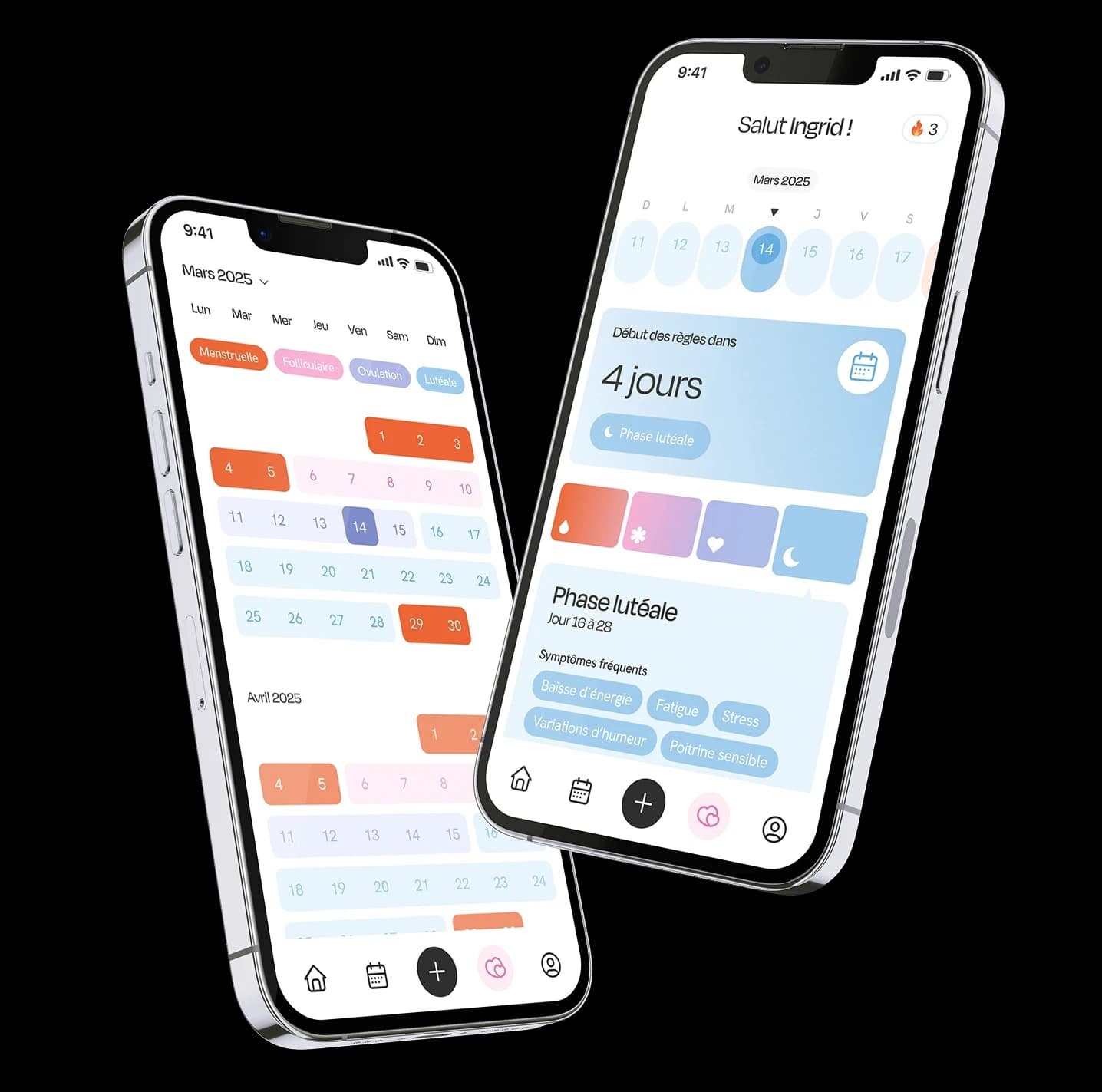
Wenly : The cycle tracking app for couples
It was with this in mind that Wenly was created : the first French menstrual cycle tracking app designed with the couple in mind. Wenly makes it easy to track your cycle, understand its phases and associated symptoms, and share key information with your partner without having to explain every detail.
The goal is clear: to transform menstrual tracking into a tool for mutual understanding and communication.