

Menstrual cycle
Painful Periods (Dysmenorrhea): What to Do, and When to See a Doctor
Painful periods aren't always normal. Causes, ways to find relief, and the signs that mean it's time to see a doctor.

"It's normal to have pain during your period." How many women have heard that line, and ended up believing it? Yet while mild discomfort is genuinely common, pain that doubles you over, keeps you from work, or comes back every month at the same intensity is not something to shrug off. This kind of painful period, which doctors call dysmenorrhea, deserves to be taken seriously.
This article separates "ordinary" period pain from pain that should raise a flag, explains what's happening in the body, and lays out the solutions that actually work. The goal: helping you move past resignation, without overdramatising either.
Two forms of dysmenorrhea, two different stories
Doctors distinguish two types of period pain, and the distinction changes everything for how it's managed.
Primary dysmenorrhea usually appears in the teenage years, in the months following the first period. It's very common and, most of the time, not a sign of anything serious. It's linked to excess prostaglandins, substances produced by the endometrium (the womb lining) during your period, which trigger contractions of the uterus to shed its lining. The more prostaglandins, the stronger the contractions, and the pain.
Secondary dysmenorrhea, on the other hand, appears well after puberty, often after years of "normal" periods. It usually points to an underlying cause that needs identifying: endometriosis is the most common cause in women of reproductive age, according to the NHS, though fibroids or an infection can also be responsible.
The signs that should raise a flag
How do you tell pain worth watching apart from ordinary discomfort? The NHS gives clear markers. See a doctor if you notice:
A change in your usual pattern: periods becoming more painful than before, or pain lasting longer than it used to.
Pain that comes with irregular periods, heavy bleeding, or unusual vaginal discharge.
Pain that doesn't respond to your usual painkillers or significantly disrupts daily life (missing work, being unable to carry out normal activities).
Pain that lasts more than three days.
These signs don't necessarily mean something serious, but they warrant medical advice to identify the cause and adjust your care.
What actually helps
The good news is that period pain can be treated, often effectively.
Anti-inflammatories like ibuprofen. By blocking prostaglandin production, they reduce uterine contractions and effectively ease pain in about 7 out of 10 cases, according to the NHS. They work best when taken at the first sign of pain, before it settles in.
Hormonal contraception. The pill or a hormonal IUD can significantly reduce menstrual pain for many women, by acting on the thickness of the endometrium.
Heat. A hot water bottle on the lower abdomen or a warm bath can relax the muscles and ease the pain.
Gentle physical activity. Counterintuitive when you're in pain, but often effective: moving improves circulation and can reduce pain intensity.
If these solutions aren't enough, a doctor can explore other options, particularly if a cause like endometriosis is suspected.
Don't confuse period pain with pain during sex
Dysmenorrhea refers to pain during your period. It's distinct from pain during sex (dyspareunia), which happens at a different point in the cycle but can share some causes, such as endometriosis. If you experience both, that's important information to bring to an appointment.
Talking about it, including as a couple
Painful periods are still too often minimised, including by women themselves, used to "just getting on with it." But pain that returns every month and forces you to cancel plans or withdraw deserves to be named, including to your partner.
Understanding the phases of the menstrual cycle helps anticipate these harder days. An informed partner can offer a hot water bottle, take on a few extra tasks, or simply be more present, without you having to justify everything each time.
Frequently asked questions
Is it normal to have pain during your period?
Mild discomfort is common. Intense pain that stops your usual activities or resists painkillers, however, isn't something to endure without medical advice.
What's the difference between primary and secondary dysmenorrhea?
Primary appears from the teenage years and is linked to prostaglandins, with no underlying cause. Secondary appears later and usually points to a cause to identify, such as endometriosis.
What medication best relieves period pain?
Anti-inflammatories like ibuprofen effectively ease pain in about 7 out of 10 cases. Hormonal contraception can also reduce pain over the long term.
When should I see a doctor about period pain?
If the pain worsens, lasts more than 3 days, resists your usual painkillers, or comes with irregular or very heavy periods.
Can painful periods be a sign of endometriosis?
Yes, it's the most common cause of secondary dysmenorrhea in women of reproductive age. Medical advice can rule it out or confirm it.
Understanding your period also means knowing when it falls outside the ordinary. With Wenly, you can track your pain intensity cycle after cycle and share that tracking with your partner, to walk into every appointment with concrete markers.

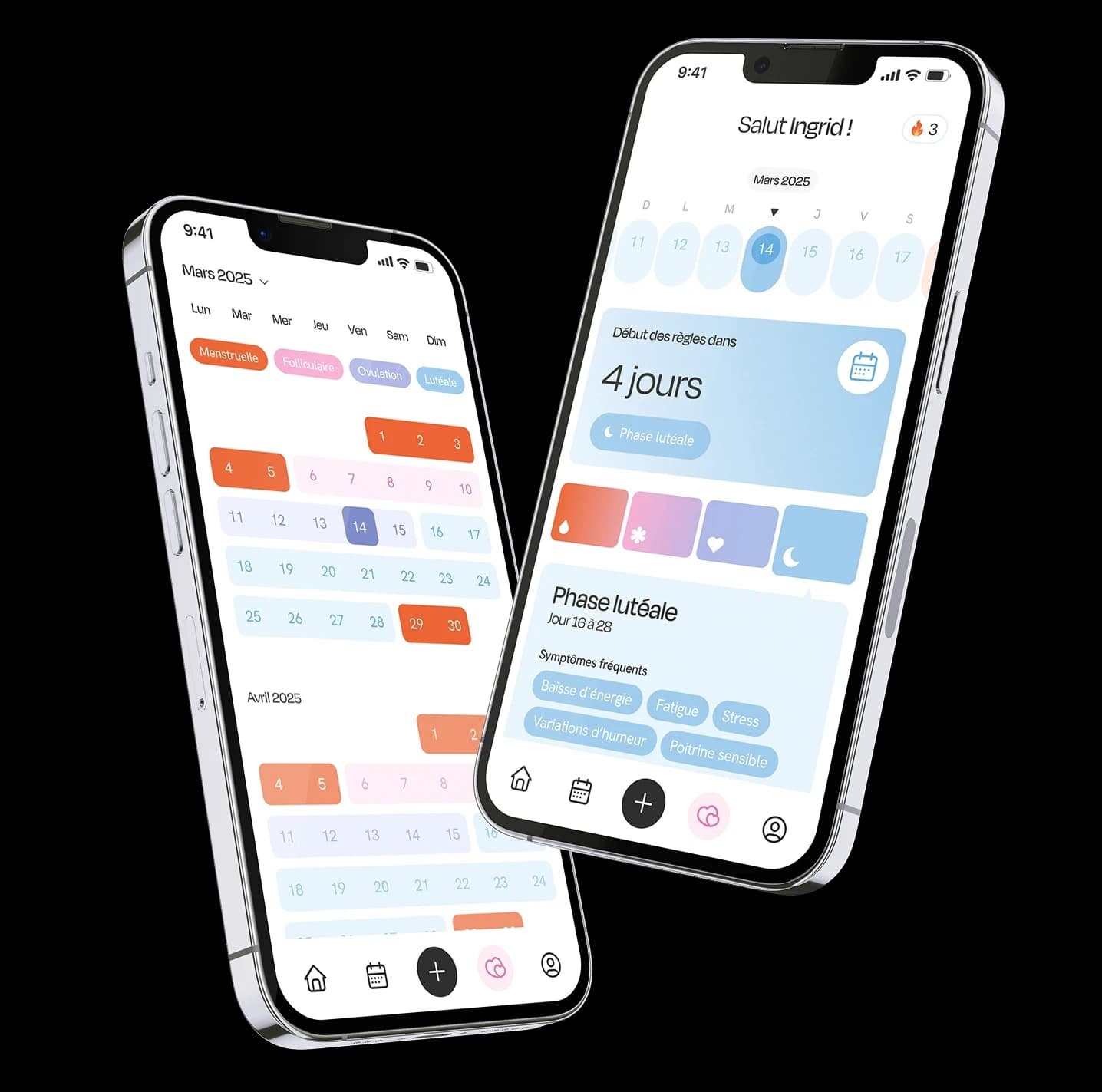
Wenly : The cycle tracking app for couples
It was with this in mind that Wenly was created : the first French menstrual cycle tracking app designed with the couple in mind. Wenly makes it easy to track your cycle, understand its phases and associated symptoms, and share key information with your partner without having to explain every detail.
The goal is clear: to transform menstrual tracking into a tool for mutual understanding and communication.